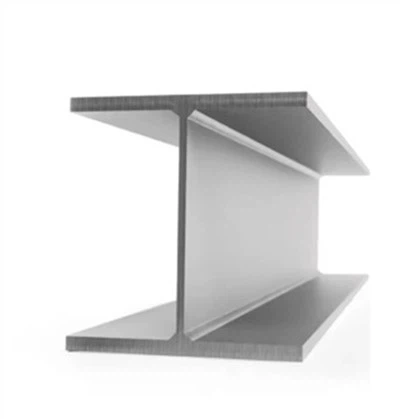


Welding is a critical process in the manufacturing of Aluminum I Beams, a product we supply. The quality of welding significantly impacts the performance of these beams, influencing their strength, durability, and overall functionality. In this blog, we will explore how welding quality affects the performance of Aluminum I Beams and why it matters in various applications.
1. Structural Integrity
The primary function of an Aluminum I Beam is to provide structural support. Welding is used to join different sections of the beam or to attach it to other components. A high - quality weld ensures that the beam can withstand the intended loads without failure.
When the welding is of poor quality, it can lead to weak joints. These weak points are more likely to experience stress concentrations, which can cause cracks to form over time. For example, in a building construction where Aluminum I Beams are used as support structures, a faulty weld could lead to a local failure. This local failure can then propagate, potentially compromising the entire structure.
On the other hand, a well - welded Aluminum I Beam distributes the load evenly across the structure. The weld acts as a seamless connection, allowing the beam to function as a single, cohesive unit. This is crucial for ensuring the long - term stability of any structure that relies on these beams.
2. Fatigue Resistance
Aluminum I Beams are often subjected to cyclic loading in many applications, such as in bridges or industrial machinery. Fatigue failure occurs when a material fails under repeated loading, even if the stress levels are below its ultimate strength.
The quality of the weld has a direct impact on the fatigue resistance of the Aluminum I Beam. A poor weld may contain defects such as porosity, lack of fusion, or undercutting. These defects act as stress raisers, accelerating the initiation and propagation of fatigue cracks.


In contrast, a high - quality weld with proper penetration and fusion reduces the likelihood of fatigue failure. The smooth and uniform nature of a good weld minimizes stress concentrations, allowing the beam to withstand a greater number of loading cycles. This is especially important in applications where the beams are exposed to continuous vibrations or dynamic loads.
3. Corrosion Resistance
Aluminum has a natural oxide layer that provides some level of corrosion resistance. However, the welding process can disrupt this protective layer, making the welded area more susceptible to corrosion.
If the welding is not done correctly, it can leave behind impurities or create areas with different electrochemical properties. These areas can act as sites for corrosion to start. For example, if there are gaps or voids in the weld, moisture and other corrosive agents can penetrate the beam, leading to rust and degradation.
A high - quality weld, on the other hand, can be treated and protected to maintain the corrosion resistance of the Aluminum I Beam. Proper post - welding treatments, such as anodizing or painting, can help restore the protective layer and prevent corrosion. Additionally, a well - executed weld with minimal defects reduces the chances of corrosion initiation.
4. Aesthetic Appeal
In some applications, the aesthetic appearance of the Aluminum I Beam is also important. For example, in architectural projects or high - end industrial designs, the welds should be clean and visually appealing.
A poor - quality weld may have visible defects such as spatter, uneven bead profiles, or burn - through. These defects not only look unprofessional but can also indicate underlying quality issues. In contrast, a high - quality weld has a smooth, uniform appearance, enhancing the overall aesthetic of the beam.
5. Comparison with Other I - Beam Materials
When considering the performance of Aluminum I Beams, it is also useful to compare them with other types of I - beams, such as Carbon Steel I Steel, Galvanized Steel I Steel, and Stainless Steel I Steel.
Carbon steel I - beams are known for their high strength but are more prone to corrosion compared to aluminum. Galvanized steel I - beams have a zinc coating that provides corrosion protection, but the welding process can damage this coating. Stainless steel I - beams offer excellent corrosion resistance but are generally more expensive than aluminum.
Aluminum I Beams, with proper welding, can offer a good balance between strength, corrosion resistance, and weight. Their lower density makes them easier to handle and transport, which can be a significant advantage in many applications.
6. Our Commitment to Quality Welding
As a supplier of Aluminum I Beams, we understand the importance of welding quality. We have a team of highly skilled welders who are trained to follow strict welding procedures.
We use advanced welding techniques and equipment to ensure the highest quality welds. Our quality control process includes non - destructive testing methods such as ultrasonic testing and radiographic testing to detect any internal defects in the welds.
In addition, we offer a range of post - welding treatments to enhance the performance of our Aluminum I Beams. These treatments can improve corrosion resistance, fatigue resistance, and the overall appearance of the beams.
7. Conclusion and Call to Action
The quality of welding has a profound impact on the performance of Aluminum I Beams. It affects their structural integrity, fatigue resistance, corrosion resistance, and aesthetic appeal. As a supplier, we are committed to providing high - quality Aluminum I Beams with excellent welds.
If you are in the market for Aluminum I Beams for your next project, we encourage you to contact us for a detailed discussion. Our team of experts can help you select the right type of beam and ensure that it meets your specific requirements. Whether you need beams for a small - scale construction project or a large - scale industrial application, we have the expertise and resources to deliver the best - quality products.
References
-ASM Handbook, Volume 6: Welding, Brazing, and Soldering. ASM International.
- Aluminum Association. Aluminum Design Manual.
- AWS D1.2/D1.2M:2010, Structural Welding Code - Aluminum. American Welding Society.