
Your Professional Angle Steel Supplier
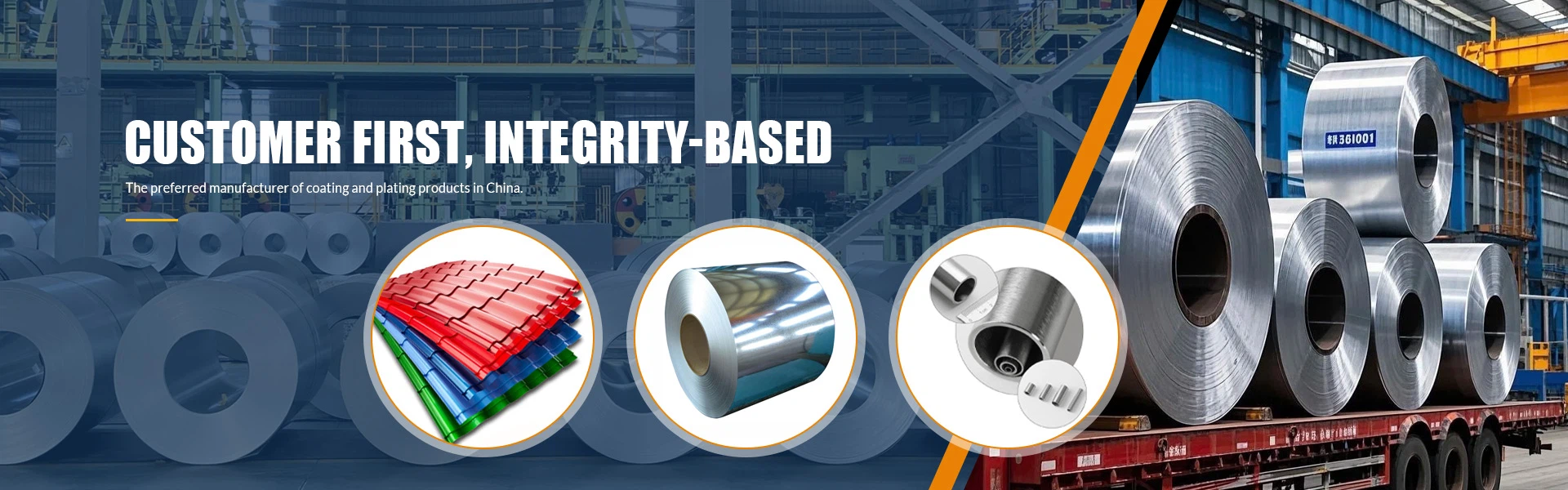
Qingdao Heyan Steel Structure Co., Ltd., ("HEYAN STEEL" for short )specializes in supplying coated and plated products, as well as a wide range of steel and non-ferrous metal materials.
Partners
Today, we collaborate with over 110 countries across Southeast Asia, South America, the Middle East, North America, and Europe. With growing international demand, Heyan Steel has earned global customer trust through its extensive production experience, robust expertise, and dependable after-sales support.
Our Production Lines
Based in Binzhou, we operate three production lines dedicated to coated and plated products. Additionally, we have invested in facilities for seamless steel pipes, stainless steel, aluminum profiles, and other items.
Our Inventory Warehouses
We maintain inventory warehouses in various regions throughout China, ensuring we can promptly provide suitable products to meet customer requirements.
-
![Carbon Steel Angle Steel]() Carbon Steel Angle SteelCarbon Steel Angle Steel is an L-shaped cross-section steel made of Q235B or Q355B carbon structural steel. It has the characteristics of high strength, good weldability and economy. As a basic...view more
Carbon Steel Angle SteelCarbon Steel Angle Steel is an L-shaped cross-section steel made of Q235B or Q355B carbon structural steel. It has the characteristics of high strength, good weldability and economy. As a basic...view more -
![Stainless Steel Angle Steel]() Stainless Steel Angle SteelStainless Steel Angle Steel is an L-shaped structural profile made of high-quality stainless steel materials such as 304 and 316L, formed by hot rolling or cold bending. With its excellent...view more
Stainless Steel Angle SteelStainless Steel Angle Steel is an L-shaped structural profile made of high-quality stainless steel materials such as 304 and 316L, formed by hot rolling or cold bending. With its excellent...view more -
![Galvanized Steel Angle Steel]() Galvanized Steel Angle SteelGalvanized Steel Angle Steel (galvanized angle steel) is an L-shaped structural steel made of Q235B carbon steel and processed by hot-dip galvanizing. A uniform zinc-iron alloy layer is formed on...view more
Galvanized Steel Angle SteelGalvanized Steel Angle Steel (galvanized angle steel) is an L-shaped structural steel made of Q235B carbon steel and processed by hot-dip galvanizing. A uniform zinc-iron alloy layer is formed on...view more -
![Aluminum Angle Bar]() Aluminum Angle BarAluminum Angle Steel is an L-shaped structural material made of high-quality aluminum alloy, which has the characteristics of light weight, high strength, corrosion resistance and easy processing....view more
Aluminum Angle BarAluminum Angle Steel is an L-shaped structural material made of high-quality aluminum alloy, which has the characteristics of light weight, high strength, corrosion resistance and easy processing....view more -
![Anodized Aluminum Angle Bar]() Anodized Aluminum Angle BarAnodized aluminum angle steel is a special surface-treated L-shaped aluminum alloy profile. Through the electrochemical oxidation process, a dense oxide film is formed on the surface, which...view more
Anodized Aluminum Angle BarAnodized aluminum angle steel is a special surface-treated L-shaped aluminum alloy profile. Through the electrochemical oxidation process, a dense oxide film is formed on the surface, which...view more -
![Unequal Angle Steel]() Unequal Angle SteelUnequal Angle Steel is an L-shaped steel with unequal sides, made of high-quality carbon steel, low-alloy steel or aluminum alloy. Due to its unique asymmetric structure, Unequal Angle Steel can...view more
Unequal Angle SteelUnequal Angle Steel is an L-shaped steel with unequal sides, made of high-quality carbon steel, low-alloy steel or aluminum alloy. Due to its unique asymmetric structure, Unequal Angle Steel can...view more


Angle Steel
Steel angle, also named angle iron, or steel angle bar, is basically manufactured by hot-rolled carbon steel or high strength low alloy steel. It has L-cross shaped section with two legs - equal or unequal and the angle would be 90 degree. Structural steel angles have lots of dimensions to comply with your uses. In addition, bespoke sizes are available.
Specifications
|
Material |
Q235B/Q355B |
|
Edge Width (mm) |
20~200 |
|
Edge Thickness (mm) |
3~20 |
|
Length (m) |
6~12 (customizable) |
|
Implementation Standard |
GB/T 706-2016 |
|
Surface Treatment |
Black Leather/Galvanized/Painted |
Benefits of Steel Angles
- Versatile
- High resistance to bending
- Easy to weld, cut, and machine
- High strength-to-weight ratio
Steel angles are used in a variety of industries, including:
Frames: Interior moldings, cladding, handrails, and utility carts are all supported by frames.
Bridges: Steel angles are heavily used for reinforcement in bridge components such as arches, girders, bearings, and pedestrian walkways. The sturdy character of steel angles ensures concrete reinforcement and less material handling during construction, which contributes to the lifetime and durability of bridge constructions.
Steel angles are necessary for structural support in the machines and appliances industries: Steel angles play an important role in strengthening structural integrity in anything from heavy industrial machinery like forklifts and bulldozers to home appliances like washing machines and stoves. They provide a unique design that adds strength and protection to the equipment when placed in corners.
Warehouse Shelves: Warehouses use the strength of steel angles to build storage racks that can withstand heavy loads. Steel angles support the corners of these racks, assuring longevity and preventing buckling under heavy loads. This use improves the overall structural integrity of warehouse shelves, allowing them to endure harsh industrial demands.
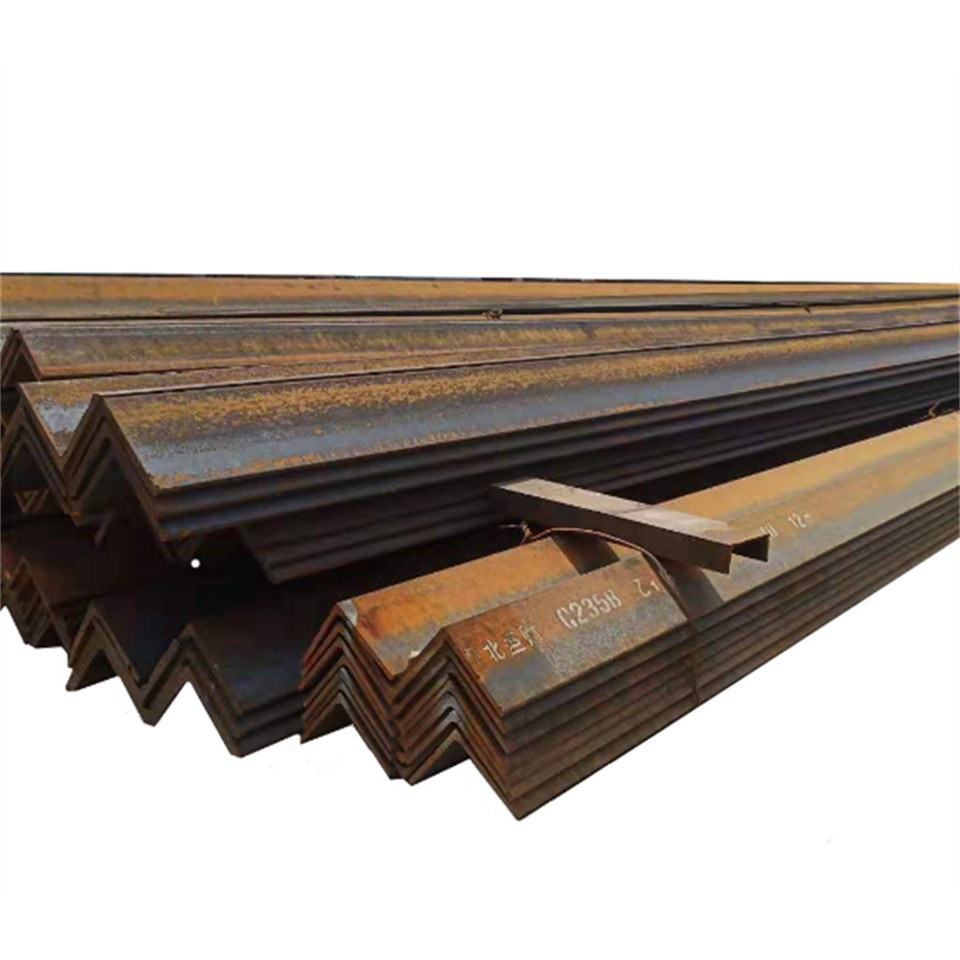
The size of steel angles can range from as small as 1/2” legs to 8” legs with thicknesses from 1/8” to 1 1/8”. Reading the standard sizing format of steel angles is relatively easy because it just consists of the two leg measurements and the thickness. For instance, 2” x 2” x 1/8” is an equal angle with legs of 2 inches and a thickness of 1/8 inches. An example of an unequal angle would be 3” x 2” x 3/16” that has legs of 3 inches and 2 inches respectively, and both have a thickness of 3/16 inches.
Common Steel Grades
ASTM
Grades like A36 and A572 are commonly used for structural applications.
EN
Grades such as S275 and S355 are used for various structural purposes.
JIS
Grades like SM490 and SS400 are utilized in Japanese applications.
Common Types
By Shape
Equilateral Angle Steel: Both sides are of equal length, typically used in structural components for buildings, bridges, and transmission towers.
Unequal Angle Steel: The sides have different lengths, suitable for complex structural designs where loads vary in different directions.
By Material:
Carbon Steel Angle Steel: Made from carbon steel, it is known for its high strength and hardness and is commonly used in construction and machinery manufacturing.
Alloy Steel Angle Steel: Contains alloy elements like chromium, manganese, and molybdenum, enhancing its mechanical properties and wear resistance.
Stainless Steel Angle Steel: Offers excellent corrosion resistance and is used in applications where resistance to corrosion is crucial, such as in the chemical industry and shipbuilding

How to Measure Angle Iron
When choosing metal angles, it is helpful to know the size and thickness of the angle iron you need. Metal angles are typically measured by their length, width, and thickness.
Length
This is the measurement of the product from end-to-end
Width
This is the measurement of the leg from the outside to the centre of the L-shape
Thickness
This is the measurement of the thickness of the legs
Selection: The primary raw material for angle steel is steel billet, typically made from low carbon steel due to its strength and weldability.
Inspection: The billets are inspected for quality to ensure they meet the required chemical composition and mechanical properties.
Furnace Heating: The steel billets are heated in a furnace to a high temperature. This process softens the steel, making it more malleable for shaping.
Hot Rolling: The heated billets are passed through a series of rolling mills to form the angle steel shape. The rolling process shapes the steel into the desired L-shaped profile.
Controlled Cooling
After rolling, the angle steel is cooled down. This is typically done using water or air to stabilize its shape and properties.
Cutting
The angle steel is cut to the required lengths using saws or shearing machines
Straightening
Any imperfections or bends are corrected using a straightening machine to ensure the steel is perfectly straight.
Surface Treatment
Galvanizing
To enhance corrosion resistance, angle steel is often galvanized. This involves dipping the steel in molten zinc to form a protective coating.
Painting
In some applications, the steel may also be painted for additional protection and aesthetic purposes.
Quality Inspection
The finished angle steel is inspected for dimensional accuracy, surface quality, and mechanical properties to ensure it meets industry standards.
Packaging
The angle steel is bundled and packaged for transportation, often in bundles to facilitate handling and storage.
Packaging & Shipping

Our Certificate
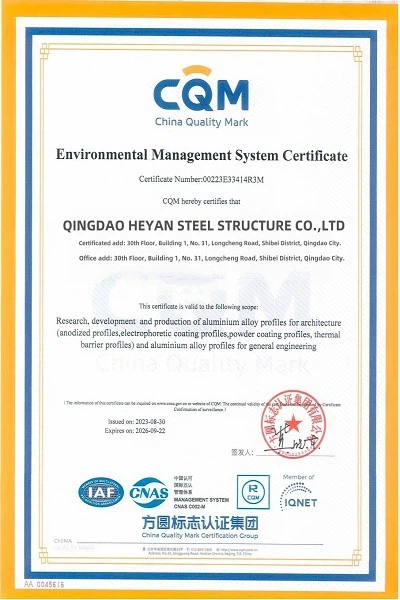
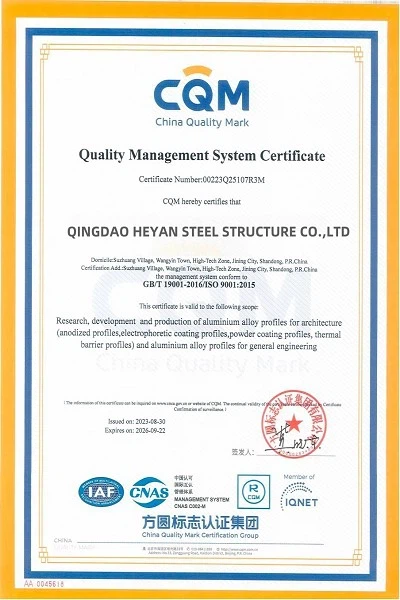
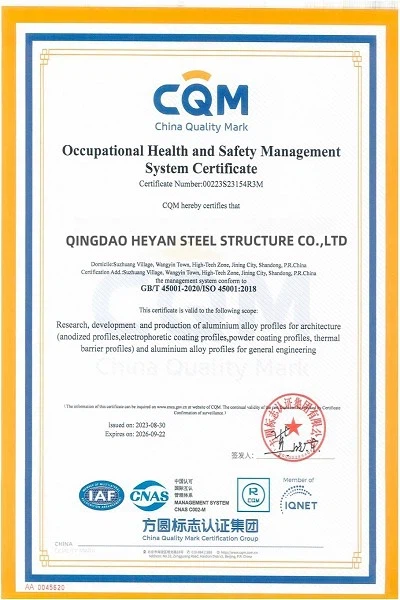
FAQ
We're professional angle steel manufacturers in China, specialized in providing high quality products with low price. We warmly welcome you to wholesale discount angle steel from our factory. For pricelist, contact us now.
Unequal Angle Steel, Carbon Steel Angle Steel, Stainless Steel Angle Steel