

Hey there! As an aluminum profile supplier, I often get asked how to calculate the load - bearing capacity of aluminum profiles. It's a crucial question, especially for those involved in construction, manufacturing, or any project where structural integrity matters. In this blog, I'll break down the process and share some insights to help you with your calculations.
Understanding Aluminum Profiles
First off, let's talk a bit about the different types of aluminum profiles. There are mainly two big categories: Architectural Aluminum Profiles and Industrial Aluminum Profiles.
Architectural aluminum profiles are commonly used in building facades, doors, and windows. They are designed to not only bear certain loads but also to look good. On the other hand, industrial aluminum profiles are more about function. They are used in things like machinery frames, conveyor systems, and automation equipment.
Factors Affecting Load - Bearing Capacity
There are several factors that influence the load - bearing capacity of aluminum profiles.
Material Properties
The type of aluminum alloy used is super important. Different alloys have different strength characteristics. For example, 6061 - T6 is a very popular alloy. It has good strength, corrosion resistance, and is easy to machine. The temper of the aluminum also matters. A T6 temper indicates that the aluminum has been solution heat - treated and artificially aged, which gives it enhanced strength.
Profile Geometry
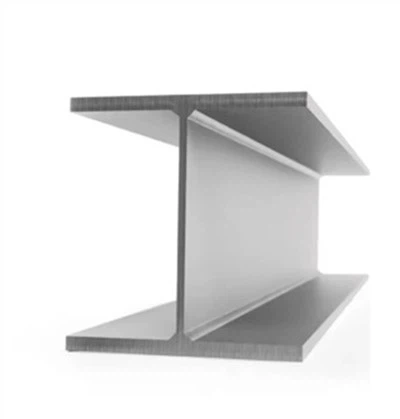
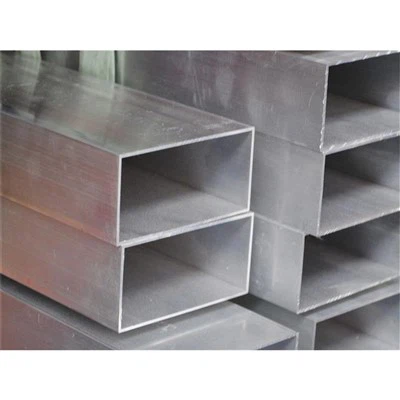
The shape and dimensions of the profile play a huge role. A profile with a larger cross - sectional area can generally bear more load. For instance, a thick - walled rectangular tube will have a higher load - bearing capacity than a thin - walled one of the same length and width. The moment of inertia, which is related to the distribution of material around the axis of bending, also affects how the profile resists bending forces.
Loading Conditions
How the load is applied is crucial. There are different types of loads, such as static loads and dynamic loads. A static load is a constant load, like the weight of a structure on a support beam. A dynamic load, on the other hand, changes over time, like the force exerted on a profile in a moving machine. Impact loads, which are sudden and short - lived, can be particularly challenging for aluminum profiles.
Calculating the Load - Bearing Capacity
Step 1: Determine the Material Properties
You need to know the yield strength ($\sigma_y$) and the ultimate tensile strength ($\sigma_{uts}$) of the aluminum alloy you're using. These values can usually be found in material data sheets provided by the manufacturer. For example, for 6061 - T6 aluminum, the yield strength is around 240 MPa and the ultimate tensile strength is about 290 MPa.
Step 2: Analyze the Profile Geometry
Measure the cross - sectional area ($A$) of the profile. You can use simple geometric formulas for regular shapes. For a rectangular cross - section, $A = b\times h$, where $b$ is the width and $h$ is the height. Calculate the moment of inertia ($I$) for the profile. For a rectangular cross - section about its centroidal axis parallel to the width, $I=\frac{bh^{3}}{12}$.
Step 3: Consider the Loading Conditions
Based on your project, identify the type of load (static, dynamic, or impact). If it's a static load, you can usually use simpler calculations. For example, if the load is applied axially (directly along the length of the profile), the maximum allowable load ($P_{allow}$) in tension or compression can be calculated using the formula $P_{allow}=A\times\sigma_{allow}$, where $\sigma_{allow}$ is the allowable stress. The allowable stress is usually a fraction of the yield strength, taking into account factors like safety margins.
If the load causes bending, you'll need to use beam - bending formulas. The maximum bending stress ($\sigma_{b}$) in a beam is given by $\sigma_{b}=\frac{M\times c}{I}$, where $M$ is the bending moment, $c$ is the distance from the centroid of the cross - section to the outermost fiber, and $I$ is the moment of inertia.
Step 4: Safety Factors
Safety factors are a must in any engineering calculation. They account for uncertainties in material properties, manufacturing processes, and loading conditions. A typical safety factor for aluminum profiles in a static - loading situation might be around 1.5 - 2. For dynamic or impact - loading situations, the safety factor should be higher, maybe 2 - 3 or more. To account for the safety factor, you divide the yield strength or the calculated maximum load by the safety factor to get the allowable values.
Practical Example
Let's say you're using a 6061 - T6 aluminum rectangular tube with a cross - section of $b = 50$ mm and $h = 80$ mm, and the wall thickness is 5 mm. The cross - sectional area $A=(50\times80)-(40\times70)=4000 - 2800 = 1200$ $mm^{2}=1.2\times10^{-3}$ $m^{2}$.
The yield strength of 6061 - T6 is $\sigma_y = 240\times10^{6}$ Pa. Let's assume a safety factor of 1.5. The allowable stress $\sigma_{allow}=\frac{\sigma_y}{1.5}=\frac{240\times10^{6}}{1.5}=160\times10^{6}$ Pa.


The maximum allowable axial load $P_{allow}=A\times\sigma_{allow}=1.2\times10^{-3}\times160\times10^{6}=192000$ N or 192 kN.
Tools and Software
There are several tools and software that can help you with these calculations. Online calculators are available for basic profile geometries and loading conditions. More advanced engineering software, like SolidWorks Simulation, ANSYS, etc., can handle complex geometries and loading scenarios. They can provide accurate results by taking into account factors like material non - linearity and dynamic loading.
When in Doubt, Consult an Expert
Calculating the load - bearing capacity of aluminum profiles can be tricky, especially for complex projects. If you're unsure about any part of the calculation, it's a good idea to consult a structural engineer or a materials expert. They can help you ensure that your design is safe and reliable.
Conclusion
As an aluminum profile supplier, I know how important it is to get the load - bearing capacity right. Whether you're working on an architectural project or an industrial application, understanding these calculations is key to a successful outcome.
If you're in the market for high - quality aluminum profiles, we're here to help. Our team can provide you with the right profiles for your project and offer guidance on load - bearing calculations. Don't hesitate to reach out to us for a consultation and to start discussing your procurement needs. We're looking forward to working with you!
References
- Aluminum Association. Aluminum Design Manual.
- Budynas, R. G., & Nisbett, J. K. (2011). Shigley's Mechanical Engineering Design. McGraw - Hill.
- Young, W. C., Budynas, R. G. (2002). Roark's Formulas for Stress and Strain. McGraw - Hill.