

As a seasoned channel steel supplier, I've encountered numerous inquiries regarding the calculation of the shear strength of channel steel. Understanding this crucial aspect is essential for engineers, architects, and construction professionals to ensure the structural integrity and safety of their projects. In this blog post, I'll delve into the intricacies of calculating the shear strength of channel steel, providing you with a comprehensive guide to make informed decisions.
Understanding Shear Strength
Shear strength refers to the maximum amount of shear stress a material can withstand before it fails. In the context of channel steel, shear stress occurs when a force is applied parallel to the cross - section of the steel, causing one part of the material to slide relative to another. This can happen in various structural applications, such as beams supporting vertical loads or in connections where forces are transferred laterally.
Factors Affecting Shear Strength of Channel Steel
Several factors influence the shear strength of channel steel:
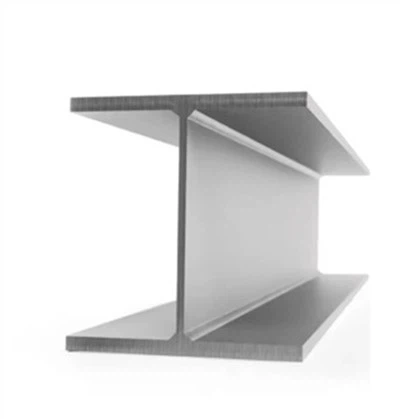
- Material Properties: The type of steel used plays a significant role. For example, Galvanized Steel Channel Steel has a protective zinc coating that not only enhances its corrosion resistance but also can affect its mechanical properties to some extent. Carbon Steel Channel Bar is known for its high strength and is commonly used in structural applications. Aluminum Channel Bar, on the other hand, offers a lightweight alternative with different shear strength characteristics compared to steel.
- Cross - Sectional Geometry: The shape and dimensions of the channel steel cross - section are crucial. The depth, width, and thickness of the web and flanges all impact the shear strength. A deeper channel with a thicker web generally has higher shear capacity.
- Loading Conditions: The type of load applied, whether it is a static load or a dynamic load, and the distribution of the load along the length of the channel steel can affect the shear strength. Concentrated loads can create higher shear stresses at specific points compared to uniformly distributed loads.
Calculation Methods
1. Using Design Codes
Most countries have established design codes for structural steel, such as the American Institute of Steel Construction (AISC) in the United States or the Eurocode in Europe. These codes provide formulas and guidelines for calculating the shear strength of steel members.
For example, according to the AISC 360 - 16 specification, the nominal shear strength (V_n) of a hot - rolled channel steel can be calculated based on the shear area (A_v) and the shear yield strength (F_{vy}). The shear area (A_v) is typically taken as the product of the web thickness (t_w) and the overall depth (d) of the channel.
The formula for the nominal shear strength is (V_n = 0.6F_yA_v), where (F_y) is the yield strength of the steel. However, there are some limitations and additional considerations depending on the slenderness of the web and other factors.


2. Analytical Approach
In some cases, an analytical approach can be used to calculate the shear strength. This involves considering the internal forces and stresses within the channel steel cross - section.
We can start by analyzing the equilibrium of forces. When a shear force (V) is applied to the channel, the shear stress (\tau) is distributed across the cross - section. The maximum shear stress usually occurs at the neutral axis of the cross - section.
For a rectangular cross - section (a simplified model of the web of the channel), the average shear stress (\tau_{avg}=\frac{V}{A_v}), where (A_v) is the shear area. However, in a channel steel, the stress distribution is more complex due to the presence of flanges.
We can use the theory of elasticity to obtain a more accurate distribution of shear stress. By solving the equilibrium equations and the compatibility conditions, we can find the maximum shear stress and then determine the shear strength based on the allowable shear stress of the material.
Step - by - Step Calculation Example
Let's assume we have a Carbon Steel Channel Bar with the following properties:
- Yield strength (F_y = 250\ MPa)
- Web thickness (t_w= 5\ mm)
- Overall depth (d = 200\ mm)
First, we calculate the shear area (A_v=t_w\times d=5\times200 = 1000\ mm^2)
According to the AISC formula (V_n = 0.6F_yA_v)
Substitute (F_y = 250\ MPa=250\times10^6\ Pa) and (A_v = 1000\times10^{- 6}\ m^2)
(V_n=0.6\times250\times10^6\times1000\times10^{-6}=150000\ N = 150\ kN)
This is the nominal shear strength of the channel steel. In practice, we need to apply a safety factor to obtain the allowable shear strength, which is used in the design of the structure.
Importance of Accurate Shear Strength Calculation
Accurate calculation of the shear strength of channel steel is of utmost importance for several reasons:
- Safety: Ensuring that the channel steel can withstand the expected shear forces is crucial for the safety of the entire structure. A miscalculation can lead to structural failure, which can have serious consequences, including property damage and endangerment of human lives.
- Cost - Effectiveness: By accurately calculating the shear strength, we can select the appropriate size and type of channel steel for the project. This helps to avoid over - designing, which can increase the cost of the project, or under - designing, which can compromise the safety of the structure.
- Compliance with Regulations: Most construction projects are subject to building codes and regulations. Accurate shear strength calculations are necessary to ensure compliance with these requirements.
Conclusion
Calculating the shear strength of channel steel is a complex but essential task in structural engineering. By understanding the factors that affect shear strength, using appropriate calculation methods, and following design codes, we can ensure the safety and efficiency of our construction projects.
As a channel steel supplier, I am committed to providing high - quality products and technical support to our customers. Whether you need Galvanized Steel Channel Steel, Carbon Steel Channel Bar, or Aluminum Channel Bar, we have a wide range of options to meet your needs.
If you have any questions regarding the shear strength calculation or need assistance in selecting the right channel steel for your project, please feel free to contact us for procurement and further discussions. We look forward to working with you to achieve your construction goals.
References
- American Institute of Steel Construction. (2016). Specification for Structural Steel Buildings (AISC 360 - 16).
- Eurocode 3: Design of steel structures. (2005). European Committee for Standardization.