

As an angle steel supplier with years of experience in the industry, I often encounter customers who are confused about the differences between equal - leg and unequal - leg angle steel. In this blog post, I'll break down the key distinctions to help you make informed decisions for your projects.
Physical Characteristics
Equal - leg Angle Steel
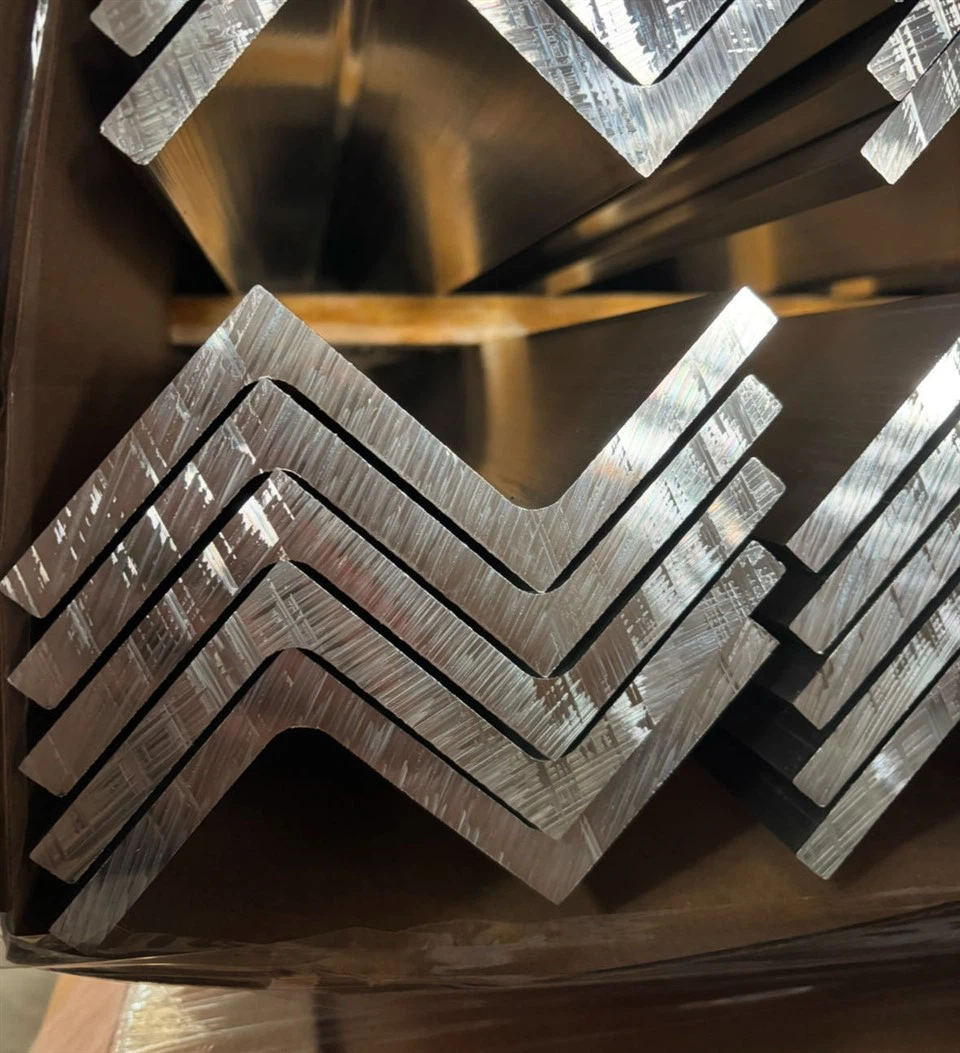
Equal - leg angle steel, as the name implies, has two legs of equal length. This geometric symmetry gives it a balanced appearance. The cross - section of equal - leg angle steel forms a right - angled shape where the two sides meeting at the right angle are of the same size. For example, a common size might be 50x50x5 mm, where the first two numbers represent the length of each leg (both 50 mm in this case), and the third number is the thickness of the steel.
This type of angle steel is widely used in applications where symmetry and balance are crucial. It provides uniform support in multiple directions, making it suitable for structures that require equal load - bearing capacity on both sides. For instance, in the construction of frames for small - scale machinery or the bracing of simple building structures, equal - leg angle steel can offer reliable stability.
Unequal - leg Angle Steel
Unequal - leg angle steel, on the other hand, has two legs of different lengths. A typical specification could be 60x40x5 mm, where one leg is 60 mm long and the other is 40 mm. This non - symmetric design allows it to be used in scenarios where different load - bearing requirements exist on each side.
The unequal legs make it ideal for applications where the structure needs to adapt to specific spatial or load - distribution needs. For example, in architectural facades, unequal - leg angle steel can be used to create angled supports that fit into irregular spaces. It can also be employed in the manufacturing of conveyor systems, where the longer leg can be used for mounting the conveyor belt, while the shorter leg provides additional support. You can find more information about Unequal Angle Steel on our website.

Mechanical Properties
Strength and Load - Bearing Capacity
Equal - leg angle steel generally has a more uniform distribution of stress across its two legs. This means that it can handle loads evenly in both directions, making it a good choice for applications where the load is applied symmetrically. When used in a square - shaped frame, for example, the equal - leg angle steel can withstand forces from all four sides without experiencing excessive stress concentration on one leg.
Unequal - leg angle steel, due to its non - symmetric nature, has different load - bearing capacities on each leg. The longer leg can usually bear more load compared to the shorter leg. This property allows it to be customized for specific load - distribution requirements. In a structure where one side needs to support more weight, such as a platform with a heavy - duty equipment on one end, unequal - leg angle steel can be strategically placed to ensure the overall stability of the structure.
Flexibility and Adaptability
Equal - leg angle steel offers a certain degree of flexibility in terms of installation. Since both legs are the same length, it can be rotated and installed in multiple orientations without changing its functionality. This makes it easier to work with in construction projects where quick assembly and adjustment are required.
Unequal - leg angle steel provides more adaptability to complex structures. Its non - symmetric shape allows it to fit into spaces where equal - leg angle steel would not be suitable. For example, in the renovation of an old building with irregularly shaped corners, unequal - leg angle steel can be used to create custom - made supports that match the unique geometry of the space.
Applications
Equal - leg Angle Steel Applications
- Building Construction: In the construction of residential and commercial buildings, equal - leg angle steel is used for framing partitions, window and door frames, and as bracing members. Its symmetry helps in creating a stable and aesthetically pleasing structure.
- Furniture Manufacturing: It is commonly used in the production of metal furniture, such as tables and chairs. The equal - leg design provides a solid base and can be easily welded or bolted together to form the frame of the furniture.
- Industrial Shelving: Equal - leg angle steel is an ideal material for making industrial shelving units. It can support heavy loads evenly across the shelves, ensuring the safety and stability of stored items.
Unequal - leg Angle Steel Applications
- Bridge Construction: In bridge building, unequal - leg angle steel is used for various purposes, such as supporting the deck and providing lateral stability. The different leg lengths can be tailored to the specific load - distribution requirements of the bridge structure.
- Automotive Industry: It is used in the manufacturing of vehicle frames and chassis components. The unequal legs can be designed to fit the specific shape and load - bearing needs of different parts of the vehicle.
- Architectural Decorations: Unequal - leg angle steel is often used in modern architectural designs to create unique and eye - catching decorative elements. Its non - symmetric shape can add a sense of dynamism to the building facade.
Material Options
Both equal - leg and unequal - leg angle steel are available in a variety of materials.
Carbon Steel
Carbon steel is the most common material for angle steel. It is known for its high strength and relatively low cost. Carbon steel angle steel is suitable for a wide range of applications, from general construction to industrial machinery. However, it is prone to corrosion, so proper surface treatment, such as galvanizing or painting, is usually required to enhance its durability.
Stainless Steel
Stainless Steel Angle Steel offers excellent corrosion resistance, making it ideal for applications in harsh environments, such as coastal areas or chemical plants. It has a sleek and modern appearance, which also makes it a popular choice for architectural and decorative purposes. Although stainless steel is more expensive than carbon steel, its long - term durability can offset the initial cost.
Aluminum
Aluminum Angle Bar is lightweight and has good corrosion resistance. It is often used in applications where weight reduction is a priority, such as in the aerospace and transportation industries. Aluminum angle steel is also easy to machine and form, making it suitable for custom - made components.
Conclusion
In summary, the main difference between equal - leg and unequal - leg angle steel lies in their physical characteristics, mechanical properties, and applications. Equal - leg angle steel is characterized by its symmetry, uniform load - bearing capacity, and flexibility in installation, while unequal - leg angle steel offers non - symmetric design, customized load - distribution, and adaptability to complex structures.
When choosing between the two, it is essential to consider the specific requirements of your project, including load - bearing capacity, spatial constraints, and aesthetic preferences. As an angle steel supplier, I am here to provide you with professional advice and high - quality products to meet your needs. If you have any questions or are interested in purchasing angle steel for your project, please feel free to contact us for further discussion and negotiation.
References
- "Structural Steel Design Handbook"
- "Metals and Alloys in the Construction Industry"