

Fatigue strength is a critical parameter when evaluating the performance and durability of structural components, especially in the context of Aluminum I Beams. As a supplier of Aluminum I Beams, understanding the fatigue strength of these products is essential for both our technical expertise and for providing the best solutions to our customers.
Understanding Fatigue in Materials
Before delving into the fatigue strength of Aluminum I Beams, it's important to understand the concept of fatigue itself. Fatigue is the progressive and localized structural damage that occurs when a material is subjected to cyclic loading. Unlike static loading, where a constant force is applied, cyclic loading involves repeated application and removal of stress, which can lead to the initiation and propagation of cracks over time.
The process of fatigue failure typically consists of three stages: crack initiation, crack propagation, and final fracture. During crack initiation, small cracks form at stress - concentration points, such as surface defects, inclusions, or areas of high stress due to the geometry of the component. As the cyclic loading continues, these cracks grow in size through crack propagation. Eventually, when the remaining cross - section of the material can no longer withstand the applied load, final fracture occurs.
Factors Affecting the Fatigue Strength of Aluminum I Beams
Several factors influence the fatigue strength of Aluminum I Beams.
Material Properties
The composition and microstructure of the aluminum alloy used in the I Beam play a significant role. Different aluminum alloys have different inherent fatigue resistances. For example, alloys with higher levels of certain alloying elements like copper, magnesium, and zinc can exhibit improved strength and fatigue performance. Heat treatment processes, such as annealing, quenching, and tempering, can also modify the microstructure of the aluminum, thereby affecting its fatigue strength. A well - heat - treated aluminum I Beam may have a more uniform grain structure, which can enhance its ability to resist crack initiation and propagation.
Beam Geometry
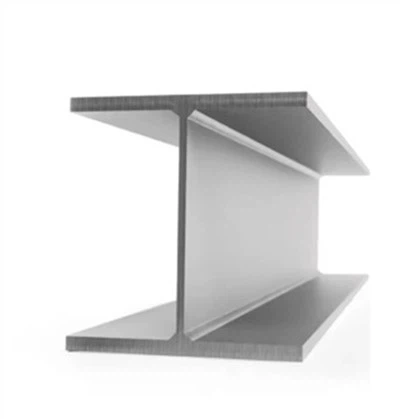
The shape and dimensions of the Aluminum I Beam are crucial. The cross - sectional shape of an I Beam, with its flanges and web, distributes stress in a specific way. The ratio of the flange width to the web height, as well as the thickness of the flanges and web, can influence the stress concentration factors. Sharp corners or sudden changes in cross - section can create areas of high stress concentration, which are more likely to initiate cracks under cyclic loading. For instance, if the fillet radius at the junction of the flange and the web is too small, it can act as a stress raiser and reduce the fatigue strength of the beam.
Surface Condition
The surface of the Aluminum I Beam is the first line of defense against fatigue. A smooth surface finish can reduce the likelihood of crack initiation. Surface defects, such as scratches, pits, or machining marks, can act as stress concentration points and accelerate the fatigue process. Additionally, surface treatments can improve the fatigue strength. For example, anodizing, which forms a protective oxide layer on the surface of the aluminum, can not only enhance corrosion resistance but also improve the fatigue performance by providing a more uniform and smooth surface. You can learn more about Anodized Aluminum I Beam.
Loading Conditions
The nature of the cyclic loading, including the amplitude, frequency, and mean stress, has a direct impact on the fatigue strength. Higher stress amplitudes generally lead to shorter fatigue lives. The frequency of the cyclic loading can also affect the fatigue process, especially in cases where environmental factors such as temperature and humidity play a role. For example, at high frequencies, there may be less time for environmental interactions to occur, which could potentially influence the crack propagation rate. The mean stress, which is the average stress level during the cyclic loading, can also shift the fatigue life curve. Tensile mean stresses typically reduce the fatigue strength, while compressive mean stresses can have a beneficial effect.
Measuring the Fatigue Strength of Aluminum I Beams
To determine the fatigue strength of Aluminum I Beams, various testing methods are employed.
Fatigue Testing Machines
These machines are designed to apply cyclic loads to the test specimens. There are different types of fatigue testing machines, such as servo - hydraulic and electromechanical machines. Servo - hydraulic machines are capable of applying high - frequency and high - amplitude loads, making them suitable for simulating a wide range of real - world loading conditions. Electromechanical machines, on the other hand, are often more precise and can be used for lower - frequency testing.
Test Specimens
Test specimens are typically cut from the Aluminum I Beams in a specific orientation to represent the actual loading conditions. The shape and size of the specimens are standardized according to international standards, such as ASTM or ISO. For example, a common specimen shape is a dog - bone shape, which is designed to ensure that the stress is concentrated in a specific region of the specimen during testing.


Fatigue Life Curves
The results of fatigue testing are often presented in the form of S - N curves (stress - number of cycles curves). These curves plot the applied stress amplitude against the number of cycles to failure. The S - N curve provides valuable information about the fatigue strength of the Aluminum I Beam. The endurance limit, which is the stress level below which the material can withstand an infinite number of cycles without failure, can be determined from the S - N curve. However, it should be noted that not all aluminum alloys have a well - defined endurance limit.
Comparison with Other I Beam Materials
When considering the fatigue strength of Aluminum I Beams, it's useful to compare them with other common I Beam materials, such as steel.
Galvanized Steel I Steel
Galvanized steel I beams are coated with a layer of zinc to protect against corrosion. In terms of fatigue strength, steel generally has a higher strength - to - weight ratio than aluminum. However, the weight of steel I beams can be a disadvantage in applications where weight is a critical factor. Galvanized steel can also be more prone to corrosion in certain environments if the zinc coating is damaged. You can find more details about Galvanized Steel I Steel.
Carbon Steel I Steel
Carbon steel I beams are known for their high strength and stiffness. They can withstand high loads and have good fatigue performance, especially in applications where the loading is relatively static. However, carbon steel is more susceptible to corrosion compared to aluminum. The need for regular maintenance and corrosion protection can add to the long - term cost of using carbon steel I beams. Check out Carbon Steel I Steel for more information.
Applications and Considerations
Aluminum I Beams are widely used in various industries due to their unique properties. In the aerospace industry, their low weight is a significant advantage, as it helps to reduce the overall weight of the aircraft, leading to improved fuel efficiency. In the automotive industry, aluminum I Beams can be used in the chassis and suspension systems to enhance performance and handling.
When using Aluminum I Beams in applications where fatigue is a concern, it's important to consider the specific loading conditions and environmental factors. For example, in marine applications, the combination of cyclic loading from waves and the corrosive saltwater environment can significantly reduce the fatigue life of the beams. Therefore, proper design, material selection, and surface treatment are essential to ensure the long - term performance of Aluminum I Beams.
Conclusion
The fatigue strength of Aluminum I Beams is a complex property that is influenced by multiple factors, including material properties, beam geometry, surface condition, and loading conditions. As a supplier of Aluminum I Beams, we are committed to providing high - quality products with excellent fatigue performance. By understanding the science behind fatigue strength, we can offer our customers the best solutions for their specific applications.
If you are interested in purchasing Aluminum I Beams or have any questions regarding their fatigue strength and application, we encourage you to contact us for a detailed discussion. We look forward to working with you to meet your structural needs.
References
- Metals Handbook: Fatigue and Fracture, ASM International.
- ASTM Standards for Fatigue Testing of Metals.
- "Fundamentals of Aluminum Metallurgy" by John Davis.