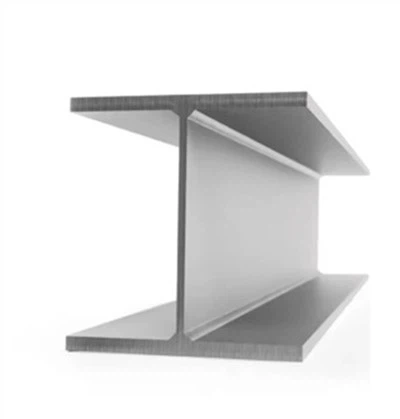


As a supplier of Aluminum I Beams, I often encounter inquiries from customers regarding the most suitable welding methods for these structural components. Aluminum I Beams are widely used in various industries due to their lightweight, high strength, and corrosion resistance. However, welding aluminum requires specific techniques and considerations compared to other metals. In this blog post, I will discuss the different types of welding suitable for Aluminum I Beams, their advantages and limitations, and provide some practical tips for achieving successful welds.
Tungsten Inert Gas (TIG) Welding
Tungsten Inert Gas (TIG) welding, also known as Gas Tungsten Arc Welding (GTAW), is one of the most popular methods for welding Aluminum I Beams. This process uses a non-consumable tungsten electrode to create an arc between the electrode and the workpiece. An inert gas, typically argon or a mixture of argon and helium, is used to shield the weld area from atmospheric contamination.
Advantages of TIG Welding for Aluminum I Beams
- High Quality Welds: TIG welding produces high-quality, clean welds with excellent penetration and fusion. This results in strong and durable joints that are essential for structural applications.
- Precise Control: The operator has precise control over the welding process, including the heat input, welding speed, and filler metal deposition. This allows for accurate and consistent welds, even on thin or complex aluminum sections.
- Versatility: TIG welding can be used to weld a wide range of aluminum alloys, including those with different thicknesses and compositions. It is also suitable for both manual and automated welding applications.
Limitations of TIG Welding for Aluminum I Beams
- Slow Welding Speed: TIG welding is a relatively slow process compared to other welding methods. This can increase the overall welding time and labor costs, especially for large-scale projects.
- Skill Requirement: TIG welding requires a high level of skill and experience to achieve optimal results. The operator must have good hand-eye coordination and be able to control the welding parameters accurately.
- Equipment Cost: TIG welding equipment is generally more expensive than other welding systems. This includes the welding machine, tungsten electrodes, shielding gas, and filler metal.
Metal Inert Gas (MIG) Welding
Metal Inert Gas (MIG) welding, also known as Gas Metal Arc Welding (GMAW), is another commonly used method for welding Aluminum I Beams. This process uses a consumable wire electrode that is fed continuously through a welding gun. An inert gas, such as argon or a mixture of argon and carbon dioxide, is used to shield the weld area from oxidation.


Advantages of MIG Welding for Aluminum I Beams
- High Welding Speed: MIG welding is a fast and efficient process, making it suitable for high-volume production applications. The continuous wire feed allows for rapid deposition of filler metal, reducing the overall welding time.
- Ease of Use: MIG welding is relatively easy to learn and operate compared to TIG welding. The semi-automatic nature of the process makes it suitable for operators with limited welding experience.
- Lower Equipment Cost: MIG welding equipment is generally less expensive than TIG welding systems. This makes it a more cost-effective option for small to medium-sized welding projects.
Limitations of MIG Welding for Aluminum I Beams
- Lower Weld Quality: MIG welding may produce welds with slightly lower quality compared to TIG welding. The higher heat input and faster welding speed can result in more porosity and spatter, which may affect the strength and appearance of the weld.
- Limited Control: The operator has less control over the welding process compared to TIG welding. This can make it more challenging to achieve precise and consistent welds, especially on thin or complex aluminum sections.
- Filler Metal Compatibility: MIG welding requires the use of specific filler metals that are compatible with the aluminum alloy being welded. Using the wrong filler metal can result in poor weld quality and reduced joint strength.
Friction Stir Welding (FSW)
Friction Stir Welding (FSW) is a solid-state welding process that is increasingly being used for welding Aluminum I Beams. This process uses a rotating tool with a specially designed pin and shoulder to generate frictional heat between the tool and the workpiece. The frictional heat softens the aluminum, allowing the tool to move through the joint and forge the two pieces together.
Advantages of Friction Stir Welding for Aluminum I Beams
- High Strength Welds: FSW produces welds with excellent mechanical properties, including high strength, ductility, and fatigue resistance. This makes it suitable for critical structural applications where joint integrity is essential.
- Low Heat Input: FSW is a low-heat welding process that minimizes the distortion and residual stresses in the welded aluminum. This results in flat and straight welds with minimal post-weld machining or finishing requirements.
- Environmentally Friendly: FSW does not produce any harmful emissions or fumes, making it a more environmentally friendly welding option compared to traditional fusion welding processes.
Limitations of Friction Stir Welding for Aluminum I Beams
- Limited Joint Design: FSW is primarily suitable for butt joints and lap joints. It may not be suitable for more complex joint designs or applications where access to the joint is restricted.
- High Initial Investment: FSW equipment is relatively expensive and requires specialized tooling and fixtures. This can make it a less cost-effective option for small-scale or prototype projects.
- Process Complexity: FSW is a complex welding process that requires a high level of expertise and understanding. The operator must have a good knowledge of the aluminum alloy properties, tool design, and welding parameters to achieve optimal results.
Choosing the Right Welding Method
When choosing the right welding method for Aluminum I Beams, several factors need to be considered, including the application requirements, aluminum alloy type, thickness, joint design, and production volume. Here are some general guidelines to help you make an informed decision:
- Structural Applications: For structural applications where high strength and durability are essential, TIG welding or FSW may be the best choices. These methods produce high-quality welds with excellent penetration and fusion, resulting in strong and reliable joints.
- High-Volume Production: If you are working on high-volume production projects, MIG welding may be more suitable due to its fast welding speed and relatively lower labor costs. However, it is important to ensure that the weld quality meets the required standards.
- Thin or Complex Sections: TIG welding is often preferred for thin or complex aluminum sections due to its precise control and ability to produce accurate and consistent welds. MIG welding may be more challenging to use on thin sections, as it can cause excessive heat input and distortion.
- Cost Considerations: The cost of the welding equipment, consumables, and labor should also be taken into account. TIG welding and FSW generally require a higher initial investment and more skilled operators, while MIG welding is more cost-effective for large-scale production.
Practical Tips for Welding Aluminum I Beams
Regardless of the welding method you choose, here are some practical tips to help you achieve successful welds on Aluminum I Beams:
- Clean the Aluminum Surface: Aluminum surfaces must be thoroughly cleaned before welding to remove any dirt, oil, oxide, or other contaminants. This can be done using a wire brush, solvent cleaning, or chemical etching.
- Use the Right Filler Metal: Select the appropriate filler metal based on the aluminum alloy being welded. The filler metal should have similar chemical composition and mechanical properties to the base metal to ensure good weld quality and joint strength.
- Preheat the Aluminum: Preheating the aluminum can help to reduce the risk of cracking and improve the weldability. The preheating temperature depends on the aluminum alloy type and thickness, but it is typically in the range of 100-200°C (212-392°F).
- Control the Heat Input: Aluminum has a high thermal conductivity, which means it can quickly dissipate heat. Therefore, it is important to control the heat input during welding to prevent overheating and distortion. This can be achieved by adjusting the welding parameters, such as the welding current, voltage, and speed.
- Use Proper Shielding Gas: Shielding gas is essential for protecting the weld area from oxidation and contamination. For TIG welding, argon or a mixture of argon and helium is commonly used. For MIG welding, argon or a mixture of argon and carbon dioxide is typically recommended.
Conclusion
In conclusion, choosing the right welding method for Aluminum I Beams is crucial for achieving strong, durable, and high-quality welds. TIG welding, MIG welding, and FSW are all viable options, each with its own advantages and limitations. By considering the application requirements, aluminum alloy type, thickness, joint design, and production volume, you can select the most suitable welding method for your specific project. Remember to follow the practical tips outlined in this blog post to ensure successful welds and optimal performance of your Aluminum I Beams.
If you are interested in purchasing Anodized Aluminum I Beam, Stainless Steel I Steel, or Galvanized Steel I Steel, please feel free to contact us for more information and to discuss your specific requirements. We are committed to providing high-quality aluminum products and excellent customer service.
References
- American Welding Society (AWS). Welding Handbook, Volume 2: Welding Processes.
- Aluminum Association. Aluminum Welding Guide.
- Lincoln Electric. Welding Aluminum: A Guide to Successful Welding.