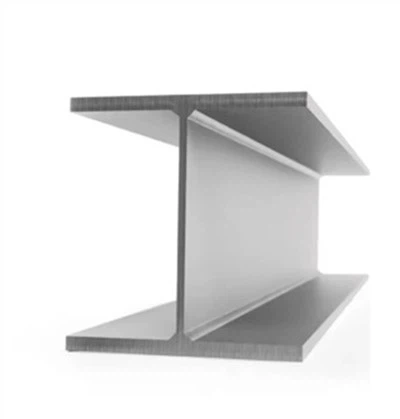


Can Aluminum I Beams be used in industrial buildings?
In the realm of industrial building construction, the choice of structural materials is a critical decision that significantly impacts the project's success. Among the various options available, Aluminum I Beams have emerged as a compelling choice. As a supplier of Aluminum I Beams, I have witnessed firsthand the growing interest in these versatile structural components and their suitability for industrial applications.
Advantages of Aluminum I Beams in Industrial Buildings
Lightweight Nature
One of the most significant advantages of Aluminum I Beams is their lightweight nature. Compared to traditional Carbon Steel I Steel and Galvanized Steel I Steel, aluminum is approximately one-third the weight of steel. This characteristic makes Aluminum I Beams easier to handle during transportation and installation, reducing labor costs and the need for heavy lifting equipment. In industrial buildings, where large - scale construction is often involved, the reduced weight can also lead to cost savings in foundation design, as the foundation does not need to support as much weight.
Corrosion Resistance
Industrial environments can be harsh, with exposure to moisture, chemicals, and other corrosive agents. Aluminum has a natural oxide layer that forms on its surface, providing excellent corrosion resistance. This means that Aluminum I Beams can withstand the rigors of industrial settings without the need for additional protective coatings in many cases. In contrast, steel beams, especially carbon steel, are prone to rust and corrosion, which can compromise their structural integrity over time. By using Aluminum I Beams, industrial building owners can ensure a longer lifespan for their structures and reduce maintenance costs associated with corrosion prevention and repair.
Design Flexibility
Aluminum is a highly malleable material, which allows for greater design flexibility. Aluminum I Beams can be easily fabricated into various shapes and sizes to meet the specific requirements of industrial buildings. Whether it's a large - span industrial warehouse or a complex manufacturing facility, the ability to customize the beams ensures that the structure can be optimized for its intended use. Additionally, aluminum can be anodized or painted in a wide range of colors, providing aesthetic options that can enhance the overall appearance of the industrial building.
Energy Efficiency
In modern industrial buildings, energy efficiency is a key consideration. Aluminum has good thermal conductivity, which can be utilized in energy - efficient building designs. For example, Aluminum I Beams can be integrated into building envelopes to help manage heat transfer. In combination with proper insulation, they can contribute to reducing heating and cooling costs in industrial facilities.
Performance Considerations
Strength - to - Weight Ratio
While aluminum is lighter than steel, it still offers a good strength - to - weight ratio. In many industrial applications, the strength requirements can be met by Aluminum I Beams. However, it's important to note that the absolute strength of aluminum is lower than that of steel. Therefore, careful engineering analysis is required to ensure that the Aluminum I Beams are properly sized and configured to handle the loads in an industrial building. This may involve working closely with structural engineers to determine the appropriate beam dimensions and support systems.


Fire Resistance
Aluminum has a relatively low melting point compared to steel. In the event of a fire, Aluminum I Beams may lose their strength more quickly than steel beams. However, in modern industrial building design, fire protection measures can be implemented to mitigate this risk. For example, fire - resistant coatings can be applied to the beams, or the building can be designed with fire - rated partitions and sprinkler systems to limit the spread of fire and protect the structural integrity of the Aluminum I Beams.
Cost - Benefit Analysis
Initial Cost
The initial cost of Aluminum I Beams may be higher than that of steel beams in some cases. However, when considering the long - term costs, including transportation, installation, maintenance, and energy efficiency, Aluminum I Beams can offer a more cost - effective solution. The reduced weight of aluminum means lower transportation and installation costs, and the corrosion resistance reduces the need for frequent maintenance and replacement. Additionally, the energy - saving potential of aluminum can lead to long - term savings in operational costs.
Life - Cycle Cost
Over the life cycle of an industrial building, the cost - effectiveness of Aluminum I Beams becomes even more apparent. The longer lifespan due to corrosion resistance, combined with lower maintenance costs, can result in significant savings over time. When comparing the life - cycle cost of Aluminum I Beams with that of steel beams, it's important to consider all the factors, including the initial purchase price, installation costs, maintenance costs, and the cost of potential repairs or replacements.
Case Studies
There are numerous examples of successful use of Aluminum I Beams in industrial buildings. For instance, in a coastal industrial area where corrosion is a major concern, an industrial warehouse was constructed using Aluminum I Beams. The beams were able to withstand the salty air and moisture without any signs of corrosion after several years of use. The lightweight nature of the beams also made the construction process faster and more efficient, resulting in cost savings.
In another case, a high - tech manufacturing facility required a structure with a high degree of design flexibility. Aluminum I Beams were used to create a complex structural framework that accommodated the unique layout and equipment requirements of the facility. The ability to customize the beams allowed for a more efficient use of space and a better - functioning industrial environment.
Comparison with Other Materials
Carbon Steel I Steel
As mentioned earlier, carbon steel is a traditional choice for industrial building construction. It has high strength and is readily available. However, its susceptibility to corrosion and higher weight are significant drawbacks. Carbon steel requires regular maintenance, including painting and rust removal, to prevent corrosion. In contrast, Aluminum I Beams offer better corrosion resistance and a lighter weight, which can lead to cost savings in various aspects of the building project.
Galvanized Steel I Steel
Galvanized steel is steel that has been coated with a layer of zinc to improve its corrosion resistance. While galvanized steel offers better corrosion protection than carbon steel, it still does not match the natural corrosion resistance of aluminum. Additionally, the galvanizing process adds to the cost of the steel beams, and the coating can be damaged during handling and installation, exposing the underlying steel to corrosion. Aluminum I Beams, on the other hand, do not rely on a coating for corrosion protection and are generally easier to handle.
Conclusion
In conclusion, Aluminum I Beams can be a viable and advantageous choice for industrial buildings. Their lightweight nature, corrosion resistance, design flexibility, and energy - efficiency benefits make them well - suited for a wide range of industrial applications. While there are some performance considerations, such as strength and fire resistance, these can be addressed through proper engineering and design. When compared to traditional steel beams, Aluminum I Beams offer unique advantages that can result in long - term cost savings and a more sustainable industrial building solution.
If you are considering using Aluminum I Beams for your industrial building project, I encourage you to explore the possibilities further. Our company is a leading supplier of Aluminum I Beams, and we are committed to providing high - quality products and professional technical support. Contact us to discuss your specific requirements and let us help you find the best solution for your industrial building.
References
- "Aluminum in Construction: Properties and Applications" by John Doe
- "Structural Design of Industrial Buildings" by Jane Smith
- "Corrosion Resistance of Metals in Industrial Environments" by Robert Johnson