

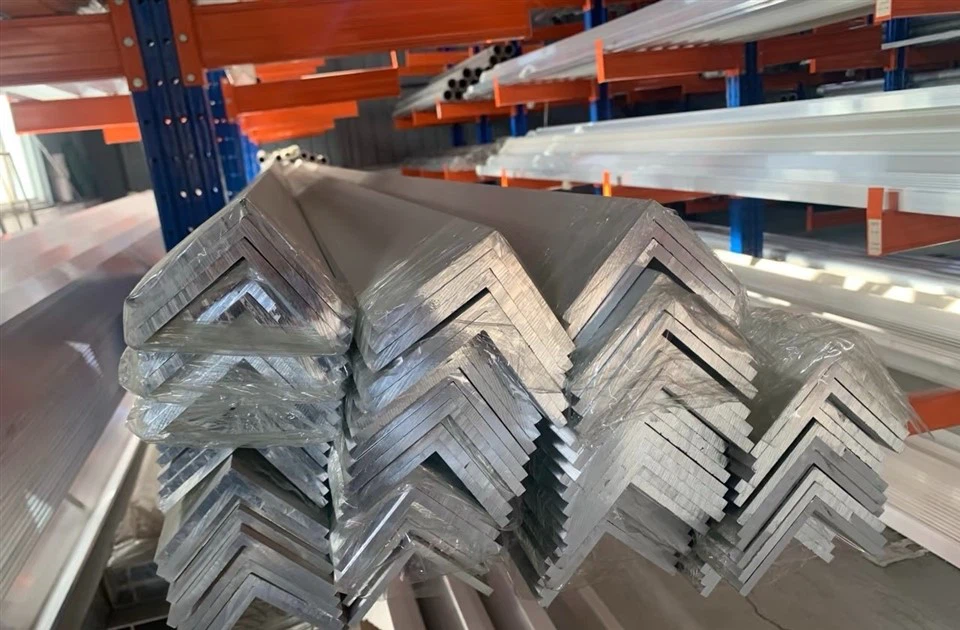
As an Aluminum Angle Bar supplier, I've witnessed firsthand the diverse needs and preferences of customers when it comes to angle bars. The choice between aluminum angle bars and steel angle bars is a crucial decision in many construction, manufacturing, and DIY projects. In this blog, I'll delve into the key differences between these two types of angle bars to help you make an informed choice.
Material Composition
Aluminum angle bars are primarily made from aluminum, a lightweight and corrosion - resistant metal. Aluminum is abundant in the Earth's crust and is known for its excellent malleability and ductility. It can be easily alloyed with other elements such as copper, magnesium, silicon, and zinc to enhance its strength and other properties. For example, 6061 - T6 aluminum alloy, a common choice for angle bars, offers a good balance of strength, corrosion resistance, and weldability.
On the other hand, steel angle bars are typically made from carbon steel or stainless steel. Carbon steel angle bars, like the ones found at Carbon Steel Angle Steel, are composed mainly of iron and carbon, with small amounts of other elements. The carbon content in carbon steel affects its hardness and strength. Higher carbon content generally results in greater strength but lower ductility. Stainless steel angle bars, which contain chromium and other alloying elements, offer superior corrosion resistance compared to carbon steel.
Weight
One of the most significant differences between aluminum and steel angle bars is their weight. Aluminum is much lighter than steel. Aluminum has a density of approximately 2.7 g/cm³, while steel has a density ranging from 7.75 to 8.05 g/cm³. This means that for the same volume, an aluminum angle bar will weigh about one - third of a steel angle bar.
The lightweight nature of aluminum angle bars makes them ideal for applications where weight is a critical factor, such as in aerospace, automotive, and marine industries. In these industries, reducing weight can lead to improved fuel efficiency, increased payload capacity, and better overall performance. For example, in aircraft construction, using Aluminum Angle Bar can help reduce the weight of the aircraft structure, resulting in lower fuel consumption.
Strength
When it comes to strength, steel angle bars generally have a higher strength - to - weight ratio than aluminum angle bars. Steel is known for its high tensile strength, which means it can withstand greater pulling forces without breaking. However, aluminum can be alloyed to achieve relatively high strength levels. For instance, some high - strength aluminum alloys can have a yield strength comparable to that of mild steel.
In applications where high strength is required, such as in heavy - duty construction and industrial machinery, steel angle bars are often the preferred choice. However, in applications where a balance of strength and weight is needed, aluminum angle bars can be a viable alternative. For example, in some building structures where the load - bearing requirements are not extremely high, aluminum angle bars can provide sufficient strength while reducing the overall weight of the structure.
Corrosion Resistance
Aluminum has a natural oxide layer on its surface that provides excellent corrosion resistance. This oxide layer forms spontaneously when aluminum is exposed to air and protects the underlying metal from further oxidation. Additionally, aluminum angle bars can be further protected through processes such as anodizing. Anodized aluminum angle bars, like those at Anodized Aluminum Angle Bar, have a thicker and more durable oxide layer, which enhances their corrosion resistance and gives them a more attractive appearance.
Carbon steel angle bars, on the other hand, are prone to rusting when exposed to moisture and oxygen. To prevent corrosion, carbon steel angle bars often need to be coated with paint, galvanized, or treated with other corrosion - resistant coatings. Stainless steel angle bars offer better corrosion resistance than carbon steel, but they are also more expensive.
In outdoor or marine applications where corrosion is a major concern, aluminum angle bars are a better choice. For example, in coastal buildings or boats, aluminum angle bars can withstand the harsh salt - water environment without significant corrosion.
Cost
The cost of aluminum and steel angle bars can vary depending on several factors, including the type of alloy, market conditions, and quantity. Generally, aluminum angle bars are more expensive than carbon steel angle bars. The higher cost of aluminum is due to the energy - intensive process of extracting and refining aluminum from its ore.
However, when considering the total cost of a project, other factors such as transportation, installation, and maintenance costs should also be taken into account. The lightweight nature of aluminum angle bars can reduce transportation costs, and their corrosion resistance can lower long - term maintenance costs. In some cases, the overall cost of using aluminum angle bars may be comparable to or even lower than that of using steel angle bars, especially in applications where corrosion protection is required.
Machinability
Both aluminum and steel angle bars can be machined, but they have different machining characteristics. Aluminum is easier to machine than steel. It has a lower melting point and is more ductile, which means it can be cut, drilled, and shaped more easily. Aluminum also produces less heat during machining, reducing the risk of tool wear and damage.

Steel, especially high - strength steel, can be more difficult to machine. It requires more powerful cutting tools and higher cutting forces. The chips produced during steel machining are often harder and more brittle, which can cause problems such as chip clogging and tool breakage. However, with the right tools and machining techniques, steel angle bars can be machined to precise specifications.
Weldability
Welding is an important joining method for angle bars in many applications. Aluminum and steel have different welding requirements. Aluminum welding requires specialized equipment and techniques. Aluminum has a high thermal conductivity, which means it dissipates heat quickly during welding. This requires higher welding currents and faster welding speeds. Additionally, the oxide layer on aluminum needs to be removed before welding to ensure a good weld joint.
Steel welding is generally more straightforward. Carbon steel can be welded using common welding methods such as shielded metal arc welding (SMAW), gas metal arc welding (GMAW), and flux - cored arc welding (FCAW). Stainless steel also requires specific welding techniques to prevent corrosion and maintain its properties.
Aesthetic Appearance
Aluminum angle bars can have a more attractive appearance than steel angle bars. Aluminum has a natural silver - gray color that can be enhanced through anodizing. Anodized aluminum can be produced in a variety of colors, providing more design options. In architectural and decorative applications, the aesthetic appeal of aluminum angle bars can be a significant advantage.
Steel angle bars, especially carbon steel, often have a dull gray appearance. While they can be painted or coated to improve their appearance, the finish may not be as smooth or long - lasting as that of anodized aluminum.
Applications
The differences between aluminum and steel angle bars make them suitable for different applications. Aluminum angle bars are commonly used in the aerospace, automotive, marine, and architectural industries. In aerospace, they are used in aircraft frames and components due to their lightweight and high strength - to - weight ratio. In automotive, they are used in body structures and engine components. In marine applications, their corrosion resistance makes them ideal for boat frames and fittings. In architecture, they are used in curtain walls, window frames, and decorative elements.
Steel angle bars are widely used in heavy - duty construction, industrial machinery, and infrastructure projects. In construction, they are used in building frames, bridges, and support structures. In industrial machinery, they are used in machine frames, conveyor systems, and equipment bases.
Conclusion
In conclusion, the choice between aluminum and steel angle bars depends on various factors such as weight, strength, corrosion resistance, cost, machinability, weldability, and aesthetic appearance. As an Aluminum Angle Bar supplier, I understand the unique properties of aluminum angle bars and their advantages in many applications. Whether you need a lightweight and corrosion - resistant solution or a high - strength option, I can provide you with the right angle bars for your project.
If you're interested in learning more about our Aluminum Angle Bar products or have any questions regarding the choice between aluminum and steel angle bars, please feel free to contact us for a procurement discussion. We're committed to providing you with the best products and services to meet your needs.
References
- ASM Handbook Committee. (2000). ASM Handbook Volume 2: Properties and Selection: Nonferrous Alloys and Special - Purpose Materials. ASM International.
- Degarmo, E. P., Black, J. T., & Kohser, R. A. (2003). Materials and Processes in Manufacturing. Wiley.
- Shigley, J. E., Mischke, C. R., & Budynas, R. G. (2004). Mechanical Engineering Design. McGraw - Hill.