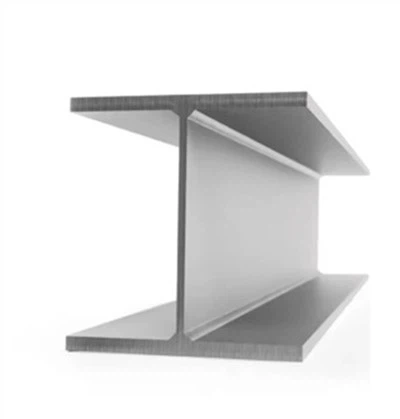


Hey there! As a supplier of Aluminum I Beams, I often get asked this question: Can Aluminum I Beams be welded? Well, let's dive right into it and break it down.
First off, the short answer is yes, aluminum I beams can be welded. But it's not as straightforward as welding some other materials. Aluminum has its own unique set of characteristics that need to be considered when it comes to welding.
Why Welding Aluminum I Beams?
Welding aluminum I beams can be super useful in a bunch of different situations. For construction projects, it allows for the creation of custom - sized structures. You can join multiple beams together to form longer spans or more complex shapes. In the automotive and aerospace industries, welded aluminum I beams can help in building lightweight yet strong frames. This is crucial because reducing weight in these industries can lead to better fuel efficiency and performance.
Challenges in Welding Aluminum I Beams
Now, let's talk about the challenges. One of the biggest issues is the oxide layer that forms on the surface of aluminum. Aluminum oxidizes really quickly when it's exposed to air. This oxide layer has a much higher melting point than the aluminum itself. If you don't remove this layer properly before welding, it can cause all sorts of problems, like porosity in the weld and reduced strength.
Another challenge is the thermal conductivity of aluminum. Aluminum is a great conductor of heat. So, when you start welding, the heat spreads out really fast. This makes it harder to control the heat input at the weld area. If you're not careful, you might end up with a situation where the aluminum around the weld gets too hot and warps, or the weld doesn't penetrate deeply enough.
Welding Processes for Aluminum I Beams
There are a few different welding processes that can be used for aluminum I beams.
TIG Welding (Tungsten Inert Gas)
TIG welding is a popular choice for welding aluminum. It gives you a high level of control over the heat input. You use a non - consumable tungsten electrode to create the arc, and a separate filler rod is added to the weld pool. TIG welding produces clean, high - quality welds, which is great for applications where appearance and strength are important. But it does require a fair amount of skill to do it well.
MIG Welding (Metal Inert Gas)
MIG welding is another option. It's generally faster than TIG welding. In MIG welding, a consumable wire electrode is fed through the welding gun, and it melts to form the weld. This process is more suitable for thicker aluminum I beams and for larger projects where speed is a factor. However, it might not produce the same level of precision as TIG welding.
Preparation for Welding Aluminum I Beams
Before you start welding, proper preparation is key. First, you need to clean the surface of the aluminum I beam. You can use a stainless - steel wire brush to remove the oxide layer. Make sure the brush is only used for aluminum to avoid contamination. After brushing, you can use a solvent to clean off any grease or oil.
Next, you need to fit the pieces together properly. The fit - up should be tight, with as little gap as possible between the parts to be welded. This helps ensure a strong and consistent weld.
Post - Weld Treatment
After welding, it's important to perform some post - weld treatment. This can include cleaning the weld area to remove any slag or spatter. You might also want to perform some form of heat treatment to relieve any residual stresses in the weld. This can improve the long - term performance of the welded aluminum I beam.
Comparing Aluminum I Beams with Other I Beams
It's interesting to compare aluminum I beams with Carbon Steel I Steel and Stainless Steel I Steel. Carbon steel I beams are known for their high strength and relatively low cost. They're often used in heavy - duty construction projects. Welding carbon steel is generally easier than welding aluminum because it doesn't have the same oxide layer and thermal conductivity issues.
Stainless steel I beams offer good corrosion resistance. They're commonly used in applications where the beam will be exposed to harsh environments. Welding stainless steel also has its own challenges, like the formation of chromium carbides, which can reduce corrosion resistance if not managed properly.
Aluminum I beams, on the other hand, are lightweight and have good corrosion resistance. They're a great choice for applications where weight is a concern, such as in the transportation industry. And as we've discussed, while welding them is more challenging, it's definitely doable.
Our Aluminum I Beams
As a supplier of Aluminum I Beam, we offer a wide range of high - quality aluminum I beams. Our beams are made from top - grade aluminum alloys, which are carefully selected to ensure the best performance. Whether you need a small quantity for a DIY project or a large order for a commercial construction job, we've got you covered.
If you're planning to weld our aluminum I beams, we can provide you with some useful tips and guidance. We understand the challenges involved in welding aluminum, and we want to help you get the best results.
Conclusion
So, to sum it up, yes, aluminum I beams can be welded. But it requires proper preparation, the right welding process, and some skill. If you're new to welding aluminum, it might take a bit of practice to get it right.


If you're interested in purchasing our aluminum I beams or have any questions about welding them, don't hesitate to reach out. We're here to assist you with your project and make sure you get the best products and support.
References
- "Welding Aluminum: Principles and Practices" by an industry expert
- Technical documents from aluminum alloy manufacturers
- Welding textbooks and online resources on metal joining processes