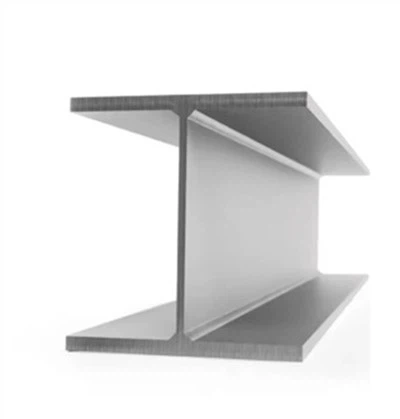


What is the modulus of elasticity of an Aluminum I Beam?
As a trusted supplier of Aluminum I Beams, I often encounter questions from customers about the technical properties of these structural elements. One of the most frequently asked questions is about the modulus of elasticity of an Aluminum I Beam. In this blog post, I'll delve into what the modulus of elasticity is, its significance for Aluminum I Beams, and how it compares to other materials commonly used in I Beam construction.
Understanding the Modulus of Elasticity
The modulus of elasticity, also known as Young's modulus, is a fundamental material property that measures the stiffness of a material. It is defined as the ratio of stress (force per unit area) to strain (deformation per unit length) within the elastic range of a material. In simpler terms, it tells us how much a material will stretch or compress when a certain amount of force is applied to it.
Mathematically, the modulus of elasticity (E) is expressed as:
E = σ / ε
Where:
- E is the modulus of elasticity (in pascals, Pa, or more commonly gigapascals, GPa)
- σ is the stress applied to the material (in Pa)
- ε is the resulting strain (dimensionless)
A high modulus of elasticity indicates that a material is stiff and will deform less under a given load, while a low modulus of elasticity means the material is more flexible and will deform more easily.
Modulus of Elasticity of Aluminum I Beams
Aluminum is a popular choice for I Beam construction due to its many advantages, including its lightweight, corrosion resistance, and ease of fabrication. The modulus of elasticity of aluminum typically ranges from about 68 to 72 GPa (68,000 to 72,000 MPa). This value can vary slightly depending on the specific alloy of aluminum used in the I Beam.
For example, 6061-T6 aluminum, one of the most commonly used alloys for structural applications, has a modulus of elasticity of approximately 68.9 GPa. This value is relatively consistent across different products made from this alloy, including Aluminum I Beams.
The relatively low modulus of elasticity of aluminum compared to steel means that Aluminum I Beams will deflect more under a given load. However, this is not necessarily a disadvantage. The lightweight nature of aluminum allows for larger spans and reduces the overall weight of the structure, which can be beneficial in many applications, such as in aerospace, automotive, and some building construction projects.
Comparison with Other I Beam Materials
To better understand the significance of the modulus of elasticity of Aluminum I Beams, it's useful to compare it with other materials commonly used in I Beam construction, such as stainless steel, carbon steel, and galvanized steel.


- Stainless Steel I Steel: Stainless steel is known for its corrosion resistance and high strength. The modulus of elasticity of stainless steel typically ranges from about 190 to 200 GPa. You can find more information about Stainless Steel I Steel. This is significantly higher than that of aluminum, which means that stainless steel I Beams will be much stiffer and deflect less under a given load. However, stainless steel is also much heavier than aluminum, which can limit its use in applications where weight is a concern.
- Carbon Steel I Steel: Carbon steel is one of the most widely used materials for I Beam construction due to its high strength and relatively low cost. The modulus of elasticity of carbon steel is around 200 GPa, similar to that of stainless steel. You can learn more about Carbon Steel I Steel. Like stainless steel, carbon steel I Beams are stiffer than Aluminum I Beams but also heavier.
- Galvanized Steel I Steel: Galvanized steel is carbon steel that has been coated with a layer of zinc to protect it from corrosion. The modulus of elasticity of galvanized steel is also around 200 GPa, the same as that of uncoated carbon steel. You can find details about Galvanized Steel I Steel. Galvanized steel I Beams offer the same stiffness as carbon steel I Beams but with the added benefit of corrosion resistance.
Importance of the Modulus of Elasticity in Design
The modulus of elasticity is a crucial factor in the design of Aluminum I Beams and other structural elements. Engineers use this property to calculate the deflection of a beam under a given load, which is an important consideration in ensuring the safety and functionality of a structure.
For example, in a building construction project, the deflection of a beam must be limited to prevent damage to the building's finishes and to ensure the comfort of the occupants. By knowing the modulus of elasticity of the Aluminum I Beam, engineers can select the appropriate beam size and shape to meet the deflection requirements.
In addition, the modulus of elasticity also affects the natural frequency of a structure. A higher modulus of elasticity generally results in a higher natural frequency, which can be important in applications where vibration is a concern, such as in bridges and machinery.
Applications of Aluminum I Beams
The unique properties of Aluminum I Beams, including their relatively low modulus of elasticity, make them suitable for a wide range of applications. Some of the common applications include:
- Aerospace: The lightweight nature of aluminum makes it an ideal choice for aerospace applications, where weight reduction is critical for fuel efficiency and performance. Aluminum I Beams are used in the construction of aircraft wings, fuselages, and other structural components.
- Automotive: In the automotive industry, Aluminum I Beams are used in the construction of vehicle frames and other structural parts to reduce weight and improve fuel efficiency. The relatively low modulus of elasticity of aluminum also allows for some flexibility, which can help absorb energy in the event of a collision.
- Building Construction: Aluminum I Beams are used in building construction for a variety of applications, such as in the construction of roofs, floors, and partitions. Their corrosion resistance makes them suitable for use in coastal areas and other environments where corrosion is a concern.
Conclusion
In conclusion, the modulus of elasticity of an Aluminum I Beam is an important material property that affects its stiffness, deflection, and performance in various applications. While aluminum has a lower modulus of elasticity compared to steel, its lightweight nature and other advantages make it a popular choice for many structural applications.
As a supplier of Aluminum I Beams, I understand the importance of providing high-quality products that meet the specific needs of my customers. Whether you're working on an aerospace project, an automotive application, or a building construction project, I can help you select the right Aluminum I Beam for your needs.
If you're interested in learning more about our Aluminum I Beams or would like to discuss your specific requirements, please don't hesitate to contact me for a detailed consultation and to start the procurement process.
References
- Callister, W. D., & Rethwisch, D. G. (2012). Materials Science and Engineering: An Introduction. Wiley.
- ASM Handbook Committee. (2000). ASM Handbook, Volume 2: Properties and Selection: Nonferrous Alloys and Special-Purpose Materials. ASM International.