

Hey there! As an i - beam supplier, I often get asked, "Can an i - beam be used as a support column?" Well, let's dive right into this topic and break it down.
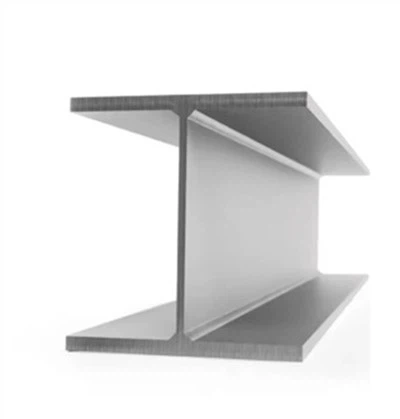
First off, what exactly is an i - beam? An i - beam, as the name suggests, has a cross - section that resembles the letter "I". It consists of a horizontal top flange, a horizontal bottom flange, and a vertical web connecting them. This unique shape gives it some pretty impressive structural properties.
One of the main advantages of an i - beam is its high strength - to - weight ratio. The flanges are great at resisting bending moments, while the web helps in handling shear forces. This makes i - beams extremely versatile in construction projects.
Now, can it be used as a support column? The answer is yes, but with some important considerations.


Structural Requirements
When using an i - beam as a support column, we need to think about the load it'll be carrying. There are two main types of loads: dead loads and live loads. Dead loads are the permanent weights in a structure, like the weight of the building materials themselves. Live loads are the variable weights, such as people, furniture, and snow.
We also have to consider the height of the column. Taller columns are more likely to buckle under load. Buckling is when a column suddenly bends or fails sideways instead of just compressing vertically. To prevent buckling, we need to make sure the i - beam has the right dimensions and is properly braced.
Material Selection
The material of the i - beam plays a crucial role. There are different types of i - beams available, each with its own characteristics.
For instance, Anodized Aluminum I Beam is a popular choice. Aluminum is lightweight, corrosion - resistant, and has a good strength - to - weight ratio. It's great for applications where weight is a concern, like in some types of industrial buildings or in structures near coastal areas where corrosion is a risk.
Stainless Steel I Steel is another option. Stainless steel is known for its high strength and excellent corrosion resistance. It can withstand harsh environments and is often used in high - end construction projects or in areas where hygiene is important, like in food processing plants.
Aluminum I Beam is also widely used. It shares many of the advantages of anodized aluminum, but without the anodized coating. It's a cost - effective option for many projects.
Installation and Design
Proper installation is key when using an i - beam as a support column. The column needs to be installed vertically and firmly anchored at the base. It should also be connected to the rest of the structure in a way that distributes the loads evenly.
In terms of design, engineers use complex calculations to determine the right size and shape of the i - beam for a specific application. They take into account factors like the load, the height of the column, and the material properties. For example, if the load is very high, a larger and thicker i - beam might be required.
Real - World Examples
In many industrial buildings, i - beams are commonly used as support columns. These buildings often have large open spaces, and i - beams can provide the necessary support without taking up too much space.
In some modern architectural designs, i - beams are also used for aesthetic purposes as well as structural support. They can create a sleek and industrial look while still being functional.
Advantages of Using an I - Beam as a Support Column
- Strength: As mentioned earlier, i - beams have high strength, which allows them to support heavy loads.
- Versatility: They can be used in a wide range of applications, from small - scale residential projects to large - scale industrial buildings.
- Cost - effectiveness: Compared to some other types of support columns, i - beams can be a more affordable option, especially when considering their strength and durability.
Disadvantages
- Buckling Risk: As we discussed, taller i - beams are at a higher risk of buckling. This means additional bracing or larger dimensions might be required, which can increase the cost.
- Corrosion: Some materials, like regular steel, are prone to corrosion if not properly protected. This can reduce the lifespan of the column and require more maintenance.
So, in conclusion, an i - beam can definitely be used as a support column, but it's important to carefully consider the structural requirements, material selection, installation, and design. If you're planning a construction project and need i - beams for support columns, I'm here to help. Whether you need Anodized Aluminum I Beam, Stainless Steel I Steel, or Aluminum I Beam, I can provide you with high - quality products.
If you're interested in purchasing i - beams for your project, feel free to reach out. We can discuss your specific needs, and I'll do my best to offer you the right solutions at a great price. Let's work together to make your construction project a success!
References
- "Structural Steel Design" by Jack C. McCormac
- "Aluminum Structures: A Guide to Their Specification and Design" by the Aluminum Association