

Product Introduction
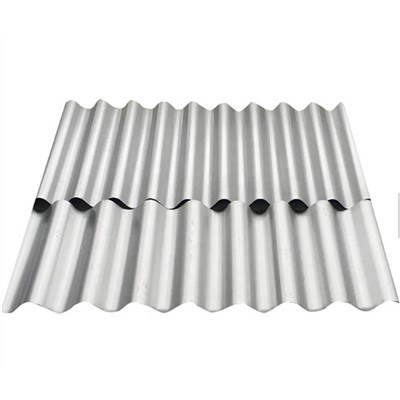
Corrugated Roof Sheet is a sheet made of color-coated steel sheet that is rolled and cold-bent into various corrugated shapes. This sheet combines the beauty and corrosion resistance of color-coated steel sheet with the structural strength of corrugated sheet, and is widely used in building roofs, walls, indoor and outdoor decoration and other fields.
Product Parameter
|
Product Name |
Corrugated Roof Sheet |
Place of Origin |
BOXING,CHINA |
|
Width |
1m-2m |
Hardness
|
Full Hard |
|
Length |
1m-12m |
Delivery Time
|
15-21days |
|
Thickness |
0.12mm-6mm |
Type of coating process
|
Front:double coated&double drying; |
|
Substrate |
DX51d/DX53d/DX52d |
Packing
|
Tied up with steel strips and wrapped with water proof paper |
|
Surface |
Zero spangles Small spangles Regular spangles Big spangles |
Delivery Time
|
7-25days |
|
Zinc Coating Thickness |
30g/㎡-275g/㎡ (Z275/G90) |
Surface
|
PVDF,HDP,SMP,PE,PU |
|
Standard |
AISI, ASTM, DIN, GB, JIS |
Shape
|
Corrugated Wave |
|
Tolerance |
+/-0.02 mm |
Keyword
|
Corrugated Roof Sheet |
|
Certificates |
SGS, ISO 9001,CE |
Skin Pass
|
YES |

Production process
1. Raw material preparation (including procurement of various raw materials and auxiliary materials):
(1) Base material - cold-rolled steel strip;
(2) Coating - aluminum-zinc alloy or electroplated tin-copper-chromium iron sheet/stainless steel surface treatment agent + PVC film;
(3) Coating - epoxy resin primer + acrylic topcoat;
(4) Curing agent - epoxy diluent / polyurethane adhesive and solvent.
2. Preforming → Thermoforming → Painting → Inspection → Packaging → Warehousing.

Key Features
1. Lightweight.
2. Short construction period.
3. Excellent earthquake resistance.
4. Excellent fire resistance.
5. Strong corrosion resistance.
A Comprehensive Guide to Steel Roof Maintenance
Steel roofs are widely used in industrial and commercial buildings due to their durability and affordability, but they require regular maintenance to ensure long-term performance. The following are key considerations for steel roof maintenance:
Routine Cleaning and Inspection
Regular Cleaning:
Inspect the roof at least once each season to remove leaves, dust, and other debris.
Clean the roof with a 5% sodium hypochlorite solution, let it sit for 20 minutes, then flush it with a hose.
Clean the gutters regularly (at least three times a year) to prevent blockages and water accumulation.
Safety Inspection:
Maintain three points of contact (at least one hand and both feet) while on a ladder.
Stand close to metal studs for stability when walking, and hire a professional if necessary.
Surrounding Environmental Management:
Mowing the roof Remove branches near the roof to prevent leaf accumulation and algae growth. Keep trees and shrubs a sufficient distance from the roof (>3m for trees and >1.5m for shrubs).
II. Anti-corrosion Maintenance
Rust Treatment:
Treat rust spots within 24 hours of discovery to prevent the formation of a rust battery effect.
Minor rust (<30% area): High-pressure clean, then sand. Apply an anti-rust primer (such as epoxy zinc yellow) and two coats of fluorocarbon topcoat.
Moderate rust (30%-50%): Consider partial replacement. Immediate replacement is recommended for areas storing valuables.
Severe rust (>50% or deformation): Complete replacement is essential. Plating is recommended. Aluminum-zinc sheet (lifespan extended by 8-10 years)
Corrosion protection cycle:
Coastal environments with high corrosion: Check film thickness every three years. If loss exceeds 30%, perform local recoating.
Inland dry environments: Inspection can be extended to five years.
Overall renovation cycle: 8-10 years (adjusted based on actual corrosion conditions).
Corrosion protection material selection:
Use a composite coating system of epoxy zinc-rich primer (zinc content ≥ 80%) + polyurethane topcoat. Sandblast to Sa 2.5, roughness 40-70μm, total dry film thickness ≥ 250μm.
III. Structural stability maintenance
Weld point inspection:
Use infrared thermal imaging technology to quickly locate weld defects, increasing inspection efficiency by 300%.
Ultrasonic flaw detectors can penetrate 50mm thick steel plates to detect internal cracks with an error rate of <0.5%.
Focus on inspecting K-groove welds subjected to alternating loads to ensure full penetration.
Deformation Monitoring:
Use a total station to measure displacement at key nodes before the rainy season each year.
For large-span steel structures, monitor one point every 20m with an accuracy of ±3mm.
The allowable mid-span deflection of steel crane beams is L/600 (L = span). Any deflection exceeding this limit requires reinforcement.
Connector Inspection:
Torque measurement every three years. Use a wrench to inspect bolt joints, maintaining a pre-tightening torque tolerance within ±10%.
Use a magnetic flaw detector to detect microcracks, and an infrared thermal imager to detect cold bridge leaks.
IV. Waterproofing System Maintenance
Joint Treatment:
Inspect the ridge, eaves, and screw joints for gaps and rust.
Remove any deteriorated sealant and reseal with neutral silicone or polyurethane sealant.
Gutter Joint Treatment: After cleaning, apply a nano-rust remover, then apply a special waterproof coating and cover with polyester sheeting.
Sealant Replacement Procedure:
Inspect the intersection of the color-coated steel plate with the gutter facade, the drain outlet, and other areas for cracks.
Clean thoroughly. Remove the original sealant and seal with cement mortar or modified asphalt sealant.
After applying the new sealant, apply 250mm wide butyl tape to enhance the seal.
Waterproofing Material Selection:
Neutral silicone adhesive: 15-20 years of weather resistance, tensile strength ≥ 2.5MPa, suitable for temperatures between 40-150°C.
Polyurethane adhesive: Excellent elastic recovery, elongation at break up to 400%, suitable for dynamic joints.
Butyl tape: Instant adhesion, 5-8 years of weather resistance, suitable for nail hole sealing.
V. Extreme Weather Countermeasures
Typhoon Protection:
Adopt a reasonable roof slope and strengthen the supporting structure.
Install wind-resistant clips or buckles to reduce the risk of wind-induced lift-off.
Add anchor points in high-risk areas such as roof panel corners and eaves.
Inspect and reinforce penetrations such as exhaust pipes and skylights before a typhoon arrives.
Snowstorm Preparedness:
Immediately clear snow accumulation exceeding 30 cm (load warning threshold).
Inspect steel structures for rust and implement timely anti-rust measures.
Long-span structures require a comprehensive inspection and prompt snow removal.
After a snowstorm, inspect structural deformation, especially the verticality of steel columns (deviations >3‰ require repair).
VI. Professional Maintenance Recommendations
In-depth Inspection Cycle:
Perform a professional inspection every 5 years. In-depth maintenance includes structural inspections, material performance testing, and system functionality testing.
Repair Cost Considerations:
The total cost of repeated repairs over a five-year period is typically 1.7 times that of direct replacement. For moderate or severe rust, it is recommended to evaluate the economic viability of replacement rather than repair.
Construction Quality Monitoring:
Beware of "cheap repair" traps: Low-quality self-tapping screws will inevitably rust and perforate within two years. Avoid "waterproof coating" scams: 90% of polyurethane coatings will chalk after 18 months.
By following the above maintenance guidelines, the lifespan of a steel roof can be significantly extended while reducing the risk of sudden damage. It is recommended to maintain a detailed maintenance log, documenting every inspection and action to provide a reference for subsequent maintenance.
Hot Tags: corrugated roof sheet, China corrugated roof sheet manufacturers, factory, Corrugated Roof Sheet, metal roofing, Galvalume Corrugated Sheet, Steel Roof Sheet, Color Coated Corrugated Sheet, Galvanized Corrugated Sheet