

Hey there! As an H-beam supplier, I often get asked if H-beams are used in the construction of power plants. Well, the short answer is yes, and in this blog, I'll dive into the details of why they're so crucial in this industry.
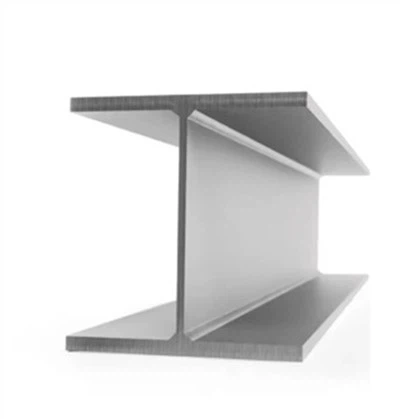
First off, let's talk about what H-beams are. They're a type of structural steel beam with an "H" cross-section. This shape gives them excellent load-bearing capabilities, making them ideal for a wide range of construction projects, including power plants.
Power plants are massive structures that need to support heavy equipment, machinery, and other components. H-beams are used in various parts of the power plant construction process to provide the necessary strength and stability.
One of the primary uses of H-beams in power plants is for the construction of the main framework. The framework serves as the backbone of the power plant, supporting the entire structure. H-beams are used to create the columns and beams that form this framework. Their high strength-to-weight ratio means that they can support a large amount of weight without adding excessive mass to the structure. This is especially important in power plants, where space and weight are often critical considerations.
Another area where H-beams are commonly used is in the construction of platforms and walkways. Power plants have numerous platforms and walkways that workers need to access for maintenance, inspection, and other tasks. H-beams are used to build these platforms and walkways, providing a safe and stable surface for workers to move around on. The wide flanges of the H-beams offer a large surface area for attaching decking materials, ensuring a secure and reliable platform.
In addition to the main framework and platforms, H-beams are also used in the construction of equipment supports. Power plants house a variety of large and heavy equipment, such as turbines, generators, and boilers. These pieces of equipment need to be securely supported to prevent vibration and movement. H-beams are used to create custom supports that can handle the specific loads and requirements of each piece of equipment.
Now, let's talk about the different types of H-beams that are commonly used in power plant construction. One popular option is the Anodized Aluminum H Beam. Aluminum H-beams are lightweight, corrosion-resistant, and have good thermal conductivity. These properties make them suitable for use in power plants where there may be exposure to moisture or other corrosive elements. They're also relatively easy to install and can be customized to meet specific design requirements.
Carbon steel H-beams, like the Carbon Steel H Steel, are another common choice. Carbon steel is known for its high strength and durability. It can withstand heavy loads and extreme conditions, making it ideal for use in the construction of power plants. Carbon steel H-beams are available in a variety of sizes and grades, allowing for flexibility in design and construction.
Galvanized steel H-beams, such as the Galvanized Steel H Steel, are also widely used. Galvanization is a process that involves coating the steel with a layer of zinc to protect it from corrosion. This makes galvanized steel H-beams highly resistant to rust and other forms of corrosion, even in harsh environments. They're a cost-effective option for power plant construction, as they require less maintenance over the long term.


When it comes to choosing the right H-beam for a power plant construction project, there are several factors to consider. The first is the load requirements. Different parts of the power plant will have different load-bearing needs, so it's important to select an H-beam with the appropriate strength and capacity. The environmental conditions are also a crucial consideration. If the power plant is located in an area with high humidity or exposure to chemicals, a corrosion-resistant H-beam may be necessary.
Another factor to consider is the cost. While it's important to choose a high-quality H-beam, it's also essential to stay within the project budget. Comparing the prices of different types of H-beams and suppliers can help you find the best value for your money.
As an H-beam supplier, I understand the importance of providing high-quality products and excellent customer service. I work closely with my clients to understand their specific needs and requirements and recommend the most suitable H-beams for their power plant construction projects. Whether you're building a new power plant or renovating an existing one, I can provide you with the right H-beams at competitive prices.
If you're involved in a power plant construction project and are in need of H-beams, I'd love to hear from you. I can offer expert advice, provide detailed product information, and assist you with the procurement process. Don't hesitate to reach out and start a conversation about how I can help you with your H-beam needs.
In conclusion, H-beams play a vital role in the construction of power plants. Their strength, durability, and versatility make them an essential component in creating safe and reliable power plant structures. Whether you choose anodized aluminum, carbon steel, or galvanized steel H-beams, you can be confident that they'll provide the support and stability needed for your project. So, if you're looking for high-quality H-beams for your power plant construction, get in touch with me today, and let's work together to make your project a success.
References
- Structural Steel Design Handbook
- Power Plant Construction Industry Reports