

How to calculate the load - bearing capacity of Aluminum H Beam?
As a supplier of Aluminum H Beams, I've witnessed firsthand the importance of accurately calculating their load - bearing capacity. The Aluminum H Beam is a versatile structural element widely used in construction, manufacturing, and various engineering projects. Understanding its load - bearing capacity is crucial to ensure the safety and stability of any structure.
Understanding the Basics of Aluminum H Beam
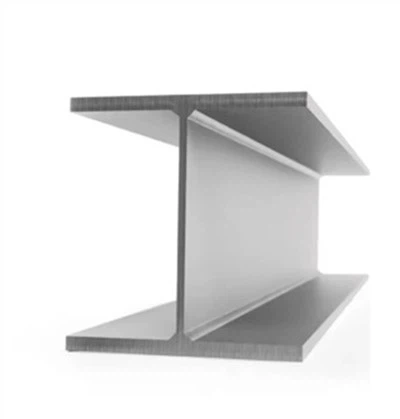
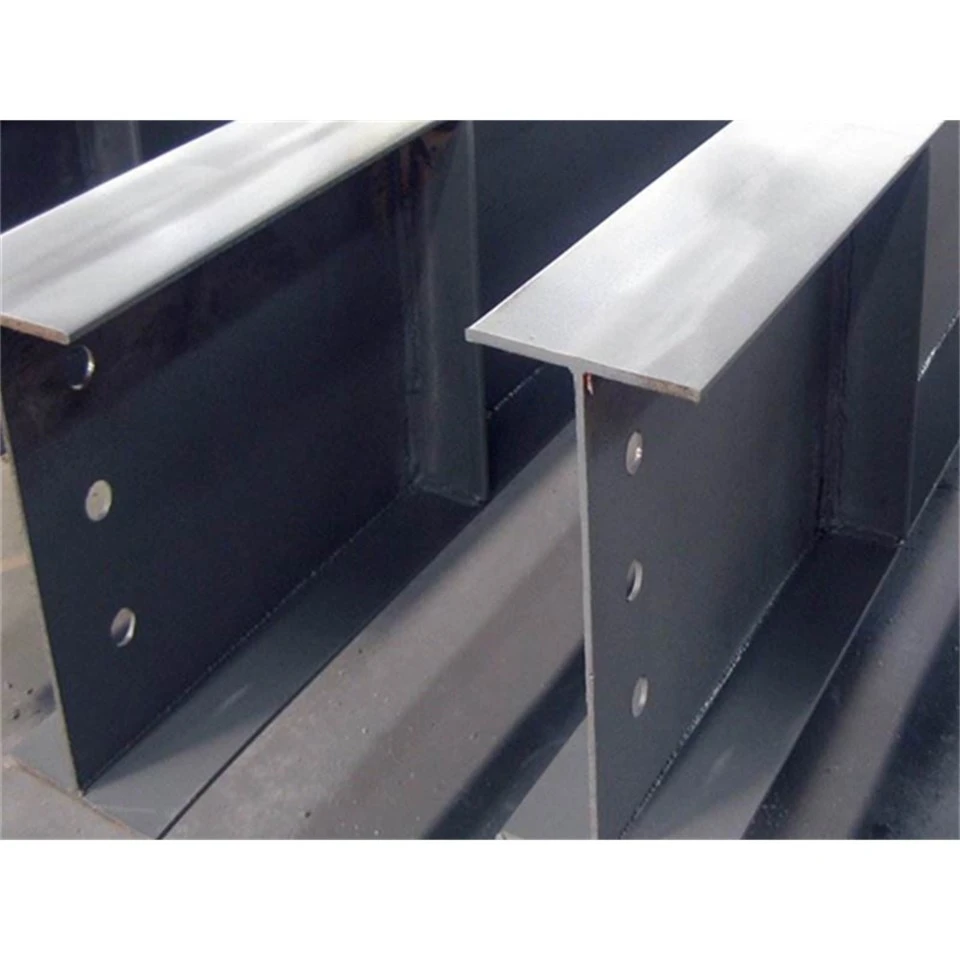
Aluminum H Beams are known for their lightweight yet strong properties. They are shaped like the letter "H" with a horizontal web and two vertical flanges. This design provides excellent resistance to bending and shear forces, making them suitable for a variety of applications. Compared to Carbon Steel H Steel, Aluminum H Beams are lighter, which can reduce the overall weight of a structure and potentially lower construction costs.

Factors Affecting the Load - Bearing Capacity
- Material Properties: The type of aluminum alloy used significantly impacts the load - bearing capacity. Different aluminum alloys have different yield strengths, ultimate strengths, and elastic moduli. For example, 6061 - T6 aluminum alloy is commonly used in structural applications due to its good strength - to - weight ratio and corrosion resistance.
- Beam Dimensions: The size of the Aluminum H Beam, including the height of the web, the width of the flanges, and the thickness of both the web and flanges, plays a crucial role. A larger cross - sectional area generally means a higher load - bearing capacity.
- Length of the Beam: As the length of the beam increases, its ability to resist bending decreases. Longer beams are more prone to deflection and buckling, which reduces their load - bearing capacity.
- Support Conditions: The way the beam is supported at its ends has a major influence on its load - bearing capacity. For example, a beam with both ends fixed will have a higher load - bearing capacity than a beam simply supported at both ends.
Calculating the Load - Bearing Capacity
- Bending Moment Calculation
- First, determine the maximum bending moment ($M$) acting on the beam. This can be done using the principles of statics. For a simply supported beam with a uniformly distributed load ($w$) over its length ($L$), the maximum bending moment is given by the formula $M=\frac{wL^{2}}{8}$.
- If the beam is subjected to a point load ($P$) at the center of the simply supported beam, the maximum bending moment is $M = \frac{PL}{4}$.
- Section Modulus Calculation
- The section modulus ($S$) of the Aluminum H Beam is a geometric property that represents the beam's resistance to bending. It can be calculated using the formula specific to the cross - sectional shape of the H Beam. For an H Beam, the section modulus for the x - axis (major axis) is calculated based on the dimensions of the web and flanges.
- Once the section modulus is known, the allowable bending stress ($\sigma_{allow}$) of the aluminum alloy can be determined from material standards. The relationship between the bending moment, section modulus, and bending stress is given by $\sigma=\frac{M}{S}$.
- To ensure the beam does not fail under bending, the calculated bending stress ($\sigma$) must be less than or equal to the allowable bending stress ($\sigma_{allow}$) of the aluminum material.
- Shear Force Calculation
- Calculate the maximum shear force ($V$) acting on the beam. For a simply supported beam with a uniformly distributed load, the maximum shear force occurs at the supports and is given by $V=\frac{wL}{2}$.
- The allowable shear stress ($\tau_{allow}$) of the aluminum alloy is determined from material standards. The shear stress ($\tau$) in the beam can be calculated using the formula $\tau=\frac{VQ}{It}$, where $Q$ is the first moment of area, $I$ is the moment of inertia of the cross - section, and $t$ is the thickness of the web. The beam must be designed such that the calculated shear stress is less than or equal to the allowable shear stress.
- Buckling Consideration
- For longer beams, buckling becomes a critical factor. Buckling is the sudden failure of a beam due to compressive forces. The critical buckling load ($P_{cr}$) can be calculated using Euler's formula for columns, modified for the H Beam configuration.
- The effective length ($L_{e}$) of the beam, which depends on the support conditions, is an important parameter in the buckling calculation.
Using Software and Standards
There are several software tools available that can assist in calculating the load - bearing capacity of Aluminum H Beams. These tools take into account all the relevant factors, including material properties, beam dimensions, and load conditions, and provide accurate results.
In addition to software, it is essential to follow relevant engineering standards and codes. For example, the American Institute of Steel Construction (AISC) has design guidelines that can be adapted for Aluminum H Beams in some cases. These standards ensure that the calculated load - bearing capacity meets the safety requirements for different applications.
Our Aluminum H Beam Products
We offer a wide range of high - quality Aluminum H Beams. Our products include Anodized Aluminum H Beams, which provide enhanced corrosion resistance and aesthetic appeal. Each beam is manufactured to strict quality control standards to ensure consistent performance.
If you are involved in a project that requires Aluminum H Beams, accurately calculating their load - bearing capacity is essential. Our team of experts can provide you with technical support and guidance on choosing the right Aluminum H Beam for your specific needs. Whether you are building a small structure or a large - scale industrial project, we have the products and knowledge to assist you.
We encourage you to reach out for procurement discussions. Our dedicated sales team is ready to answer your questions and provide you with detailed product information and pricing. By working with us, you can ensure that your project uses high - quality Aluminum H Beams that meet the required load - bearing capacity and safety standards.
References
- Aluminum Association. Aluminum Design Manual.
- American Institute of Steel Construction. Manual of Steel Construction.
- Timoshenko, S. P., & Gere, J. M. (1972). Theory of Elastic Stability. McGraw - Hill.