

What is the deflection limit for an Aluminum I Beam?
As a long - standing supplier of Aluminum I Beams, I've often been asked about the deflection limit of these remarkable structural components. Deflection is a critical factor in structural engineering, which refers to the degree of bending or deformation that an I - beam undergoes when subjected to loads. Understanding the deflection limit is essential for ensuring the safety, functionality, and durability of any structure incorporating Aluminum I Beams.
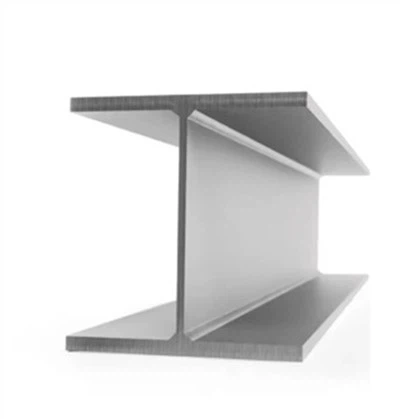
To grasp the concept of deflection limits, we first need to delve into the physical properties of Aluminum I Beams. Aluminum is a lightweight yet strong metal, which makes it a popular choice in construction projects where weight is a concern, such as in the aerospace industry, high - rise buildings, and bridges. The I - beam design, with its characteristic shape, provides excellent resistance to bending forces. The flanges at the top and bottom of the beam distribute the load, while the web in the middle resists shear forces.
The deflection of an Aluminum I Beam is influenced by several factors, including the length of the beam, the magnitude and type of the load it bears, the material properties of the aluminum, and the cross - sectional dimensions of the beam. For instance, a longer beam will generally deflect more than a shorter one under the same load. Similarly, a heavier load will cause greater deflection.


Engineers use a variety of methods and formulas to calculate the deflection of Aluminum I Beams. One of the most common formulas is based on the principles of beam theory, which takes into account the beam's flexural rigidity (EI), where E is the modulus of elasticity of aluminum and I is the moment of inertia of the beam's cross - section. The value of E for aluminum typically ranges from 69 to 71 GPa. The moment of inertia I depends on the specific cross - sectional shape and dimensions of the I - beam.
So, what is the deflection limit for an Aluminum I Beam? The deflection limit is not a fixed value; it varies depending on the application and the relevant building codes and standards. In general, for small - scale applications where aesthetic concerns are more prominent, such as in architectural frameworks, the deflection limit may be set relatively low to ensure that the beam does not visibly sag. A common guideline is that the maximum deflection should not exceed L/360 of the beam's span length (L). This means that for a 6 - meter span beam, the maximum allowable deflection would be 6000/360 = 16.67 mm.
In industrial applications, where the functionality of the structure is the primary concern, the deflection limit may be more lenient. For example, in some manufacturing facilities, a deflection limit of L/180 or even L/150 may be acceptable. However, it's important to note that excessive deflection can lead to problems such as stress concentration, which may eventually cause the beam to fail. Therefore, engineers must carefully assess the specific requirements of each project and select an appropriate deflection limit.
Comparing Aluminum I Beams with other types of I - beams, such as Galvanized Steel I Steel and Stainless Steel I Steel, we can see some distinct differences. Steel has a higher modulus of elasticity than aluminum, which means that steel I - beams are generally stiffer and deflect less than aluminum I - beams under the same load and span conditions. However, steel is also heavier, which can be a drawback in applications where weight savings are crucial. Galvanized steel offers corrosion resistance, while stainless steel provides excellent durability and aesthetic appeal.
As an Aluminum I Beam supplier, I understand the importance of providing high - quality products that meet or exceed the required deflection limits. Our company invests heavily in research and development to ensure that our Aluminum I Beams are designed with optimal cross - sectional shapes and material properties. We use advanced manufacturing techniques to produce I - beams with precise dimensions and consistent quality.
When selecting an Aluminum I Beam for your project, it's essential to work closely with a qualified engineer. The engineer can perform detailed calculations to determine the appropriate beam size and deflection limit based on the specific loading conditions and design requirements of your project. Our sales team is always ready to assist you in selecting the right Aluminum I Beam. We can provide you with technical specifications, product samples, and even help you with custom - made solutions if needed.
At our company, we take pride in our commitment to quality and customer satisfaction. Whether you are building a small residential structure or a large - scale industrial facility, our Aluminum I Beam products are designed to meet your needs. If you are interested in purchasing Aluminum I Beams for your next project, don't hesitate to contact us. We are more than happy to engage in further discussions and collaborate with you to ensure the success of your construction project.
References
- Budynas, Ronald G., and J. Keith Nisbett. "Shigley's Mechanical Engineering Design." McGraw - Hill Education, 2015.
- Gere, James M., and Barry J. Goodno. "Mechanics of Materials." Cengage Learning, 2012.
- American Institute of Steel Construction (AISC). "Specification for Structural Steel Buildings." AISC, 2016. Although mainly for steel, it provides general principles applicable to beam design.