

Hey there! As an H-beam supplier, I've been getting a lot of questions lately about the lateral stability of H-beams. So, I thought I'd take the time to break it down for you all.
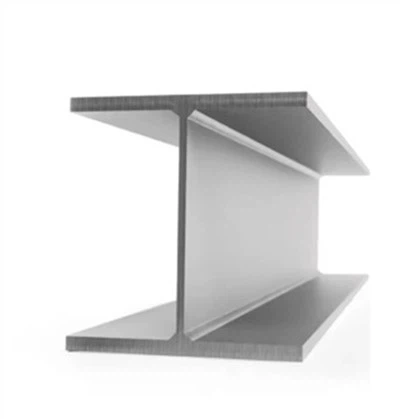
First off, let's talk about what H-beams are. H-beams are structural steel beams with an "H" cross-section. They're super strong and are commonly used in construction projects, like building skyscrapers, bridges, and industrial buildings. The reason they're so popular is that they can handle a lot of weight and stress, making them ideal for supporting large structures.
Now, onto the main topic: lateral stability. Lateral stability refers to an H-beam's ability to resist sideways or lateral forces. When an H-beam is under load, it not only has to support the vertical weight but also needs to stay stable from side to side. If an H-beam lacks lateral stability, it can buckle or twist, which is a huge no-no in construction.
There are a few factors that affect the lateral stability of an H-beam. One of the main factors is the beam's length. The longer the H-beam, the more likely it is to experience lateral instability. This is because as the length increases, the beam becomes more flexible and is more prone to buckling under lateral forces.
Another important factor is the shape and dimensions of the H-beam. The width and thickness of the flanges (the horizontal parts of the "H") and the web (the vertical part) play a crucial role in determining lateral stability. Generally, wider flanges and a thicker web can provide better lateral support and increase the beam's stability.
The way the H-beam is supported also matters. If the beam is properly supported at regular intervals, it can better resist lateral forces. For example, using braces or columns to support the beam along its length can significantly improve its lateral stability.
Material properties also have an impact on lateral stability. Different materials have different strengths and stiffnesses. For instance, Carbon Steel H Steel is known for its high strength, which can contribute to better lateral stability compared to some other materials. On the other hand, Aluminum H Beam is lighter but may require additional design considerations to ensure adequate lateral stability.
Let's take a closer look at some real - world scenarios. Imagine a large industrial building with long - span H - beams supporting the roof. These beams are subjected to various forces, such as wind loads and the weight of the roofing materials. If the beams don't have sufficient lateral stability, they could start to buckle during a strong windstorm, which could lead to a partial or complete collapse of the roof.
To calculate the lateral stability of an H - beam, engineers use complex mathematical formulas and computer models. These tools take into account all the factors we've discussed, like the beam's length, shape, material properties, and support conditions. By doing these calculations, they can determine if the H - beam is suitable for a particular application and if any additional measures are needed to improve its lateral stability.
In some cases, additional reinforcement may be required to enhance lateral stability. This could involve adding stiffeners to the web of the H - beam or using additional bracing systems. For example, if an H - beam is used in a high - rise building where it's exposed to strong wind forces, the engineer might recommend adding diagonal braces to the beam to prevent lateral movement.
Now, let's talk about some of the different types of H - beams we offer. We have Anodized Aluminum H Beam, which is not only lightweight but also has a protective anodized coating. This coating makes the beam more resistant to corrosion, which is great for outdoor applications. The anodized aluminum H - beam can be a good choice when you need a beam that offers some level of lateral stability while also being easy to handle and install.
Our carbon steel H - steel is another popular option. It's known for its high strength and durability. Carbon steel can withstand heavy loads and is often used in large - scale construction projects where lateral stability is of utmost importance.
When it comes to choosing the right H - beam for your project, it's essential to consider the specific requirements of your application. Think about the load the beam will need to support, the environmental conditions it will be exposed to, and the required level of lateral stability.
If you're still not sure which H - beam is right for you, don't worry! Our team of experts is here to help. We can work with you to understand your project needs and recommend the best H - beam solution. Whether you're building a small shed or a large commercial complex, we have the products and knowledge to ensure your project is a success.
In conclusion, lateral stability is a critical aspect of H - beam design and performance. Understanding the factors that affect lateral stability can help you make informed decisions when choosing an H - beam for your construction project. By considering the beam's length, shape, support conditions, and material properties, you can ensure that your H - beam will provide the necessary strength and stability.
If you're interested in purchasing H - beams or have any questions about lateral stability or our products, feel free to reach out. We're always happy to have a chat and discuss how we can meet your needs. Let's work together to build a strong and stable structure!
References


- "Structural Steel Design" textbooks commonly used in engineering courses
- Industry standards and guidelines for steel construction