

As a supplier of Aluminum Angle Bars, I often receive inquiries from customers about the load - bearing capacity of these versatile structural components. Understanding the load - bearing capacity of an aluminum angle bar is crucial for various applications, ranging from construction and engineering projects to DIY home improvement tasks. In this blog post, I will delve into the factors that influence the load - bearing capacity of aluminum angle bars and provide some insights to help you make informed decisions when selecting the right product for your needs.
Factors Affecting the Load - Bearing Capacity of Aluminum Angle Bars
Material Properties
The first and most fundamental factor is the material itself. Aluminum is known for its excellent strength - to - weight ratio. Different alloys of aluminum have different mechanical properties, which directly impact the load - bearing capacity. For example, 6061 - T6 aluminum alloy is widely used in structural applications due to its high strength, good corrosion resistance, and weldability. This alloy can withstand a relatively large amount of stress compared to some other aluminum alloys.
The purity of the aluminum also plays a role. Higher - purity aluminum generally has lower strength but better ductility, while aluminum alloys with specific alloying elements are designed to enhance strength. When we talk about the load - bearing capacity, we are essentially looking at how much stress the material can handle before it deforms or fails.
Geometric Dimensions
The size and shape of the aluminum angle bar are critical determinants of its load - bearing capacity. The thickness of the bar, the length of the legs, and the overall cross - sectional area all contribute to its ability to support loads. A thicker angle bar with longer legs will typically have a higher load - bearing capacity than a thinner and shorter one.
For instance, if we compare a small - sized aluminum angle bar with a cross - sectional area of 1 square inch and a large - sized one with a cross - sectional area of 5 square inches, the larger bar can support a significantly greater load. This is because a larger cross - sectional area provides more material to resist the applied forces.
Loading Conditions
The way the load is applied to the aluminum angle bar is another important factor. There are different types of loading, such as axial loading, bending loading, and shear loading.
- Axial Loading: When a load is applied along the axis of the angle bar, the bar is mainly subjected to compression or tension. In compression, the bar needs to resist the crushing force, while in tension, it must withstand the pulling force. The load - bearing capacity in axial loading depends on the material's yield strength and the cross - sectional area of the bar.
- Bending Loading: Bending occurs when a load is applied perpendicular to the axis of the bar, causing it to bend. The ability of the angle bar to resist bending is related to its moment of inertia, which is a geometric property that depends on the shape and dimensions of the cross - section. A bar with a higher moment of inertia can better resist bending and thus has a higher load - bearing capacity under bending conditions.
- Shear Loading: Shear loading happens when two parts of the bar are forced to slide past each other. The shear strength of the aluminum material and the cross - sectional area in the shear plane determine the load - bearing capacity under shear loading.
End Conditions
The way the ends of the aluminum angle bar are supported or fixed also affects its load - bearing capacity. There are different end conditions, such as fixed ends, pinned ends, and free ends.
- Fixed Ends: When the ends of the bar are fixed, they are restricted from rotating and translating. This provides additional support and increases the load - bearing capacity of the bar, especially under bending loads.
- Pinned Ends: Pinned ends allow the bar to rotate but restrict translation. The load - bearing capacity under pinned - end conditions is lower than that under fixed - end conditions.
- Free Ends: A bar with free ends has the least amount of support and thus the lowest load - bearing capacity.
Calculating the Load - Bearing Capacity
Calculating the exact load - bearing capacity of an aluminum angle bar is a complex process that often requires advanced engineering knowledge and the use of structural analysis software. However, there are some general formulas and standards that can be used for approximate calculations.
For axial loading, the maximum axial load (P) that a bar can withstand can be estimated using the formula (P=\sigma_yA), where (\sigma_y) is the yield strength of the aluminum material and (A) is the cross - sectional area of the bar.
For bending loading, the maximum bending moment (M) that a bar can resist is related to its section modulus (S) and the allowable bending stress (\sigma_b) by the formula (M = \sigma_bS). The section modulus is a geometric property that can be calculated based on the cross - sectional shape of the angle bar.
It's important to note that these calculations are based on idealized conditions and assumptions. In real - world applications, factors such as corrosion, fatigue, and temperature can also affect the load - bearing capacity. Therefore, it's always recommended to consult a professional engineer for accurate load - bearing capacity calculations in critical applications.
Applications and the Importance of Load - Bearing Capacity
Aluminum angle bars are widely used in various applications, and understanding their load - bearing capacity is essential for ensuring the safety and reliability of these applications.

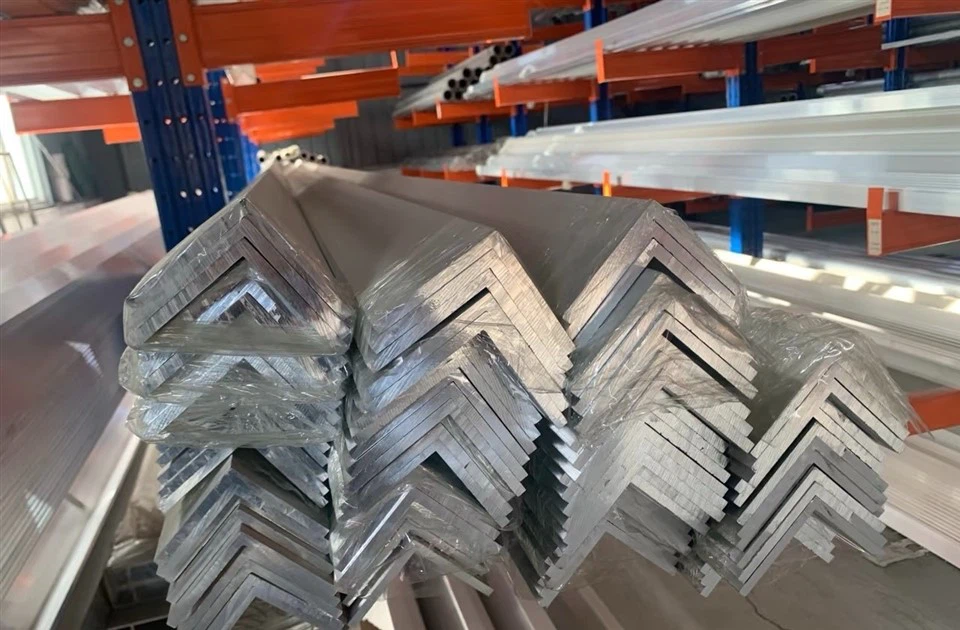
- Construction: In construction projects, aluminum angle bars are used for framing, support structures, and decorative elements. For example, they can be used as corner braces in a building's framework. Knowing the load - bearing capacity helps architects and engineers design structures that can withstand the expected loads, such as the weight of the building materials, wind forces, and seismic forces.
- Manufacturing: In the manufacturing industry, aluminum angle bars are used in the fabrication of machinery, equipment, and fixtures. They need to support the weight of the components and any dynamic loads generated during operation. Understanding the load - bearing capacity ensures that the machinery operates safely and efficiently.
- DIY Projects: Even in DIY home improvement projects, such as building a bookshelf or a garden shed, the load - bearing capacity of the aluminum angle bars is important. Using angle bars with insufficient load - bearing capacity can lead to structural failure and potential safety hazards.
Comparison with Other Structural Materials
When considering the use of aluminum angle bars, it's useful to compare their load - bearing capacity with other common structural materials, such as Carbon Steel Angle Steel.
Carbon steel angle steel generally has a higher density and higher strength than aluminum angle bars. However, aluminum has several advantages, such as its lightweight nature, corrosion resistance, and ease of fabrication. In applications where weight is a critical factor, such as in aerospace or automotive industries, aluminum angle bars may be a better choice despite their relatively lower load - bearing capacity compared to carbon steel.
Our Aluminum Angle Bar Products
As a supplier, we offer a wide range of Aluminum Angle Bars and Anodized Aluminum Angle Bars to meet different customer needs. Our products are made from high - quality aluminum alloys and are available in various sizes and finishes.
We understand that each customer's application is unique, and the load - bearing capacity requirements may vary. That's why we provide technical support to help our customers select the right product for their specific applications. Whether you are working on a large - scale construction project or a small DIY task, we can assist you in finding the aluminum angle bar with the appropriate load - bearing capacity.
Contact Us for Procurement
If you are interested in our aluminum angle bar products or need more information about their load - bearing capacity, please feel free to contact us. We are committed to providing you with the best products and services to ensure the success of your projects. Our team of experts is ready to answer your questions and help you with your procurement needs.
References
- Budynas, R. G., & Nisbett, J. K. (2011). Shigley's Mechanical Engineering Design. McGraw - Hill.
- Timoshenko, S. P., & Gere, J. M. (1972). Mechanics of Materials. Van Nostrand Reinhold.