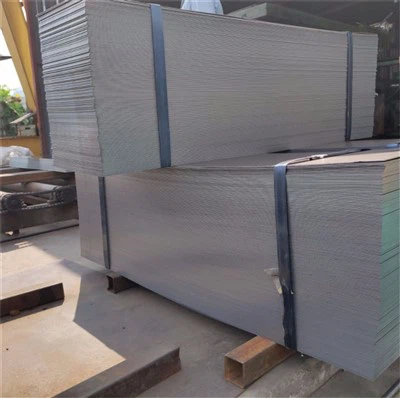


Products Description
Hot Dip Galvanized Sheet are processed by immersing the processed steel coils into molten zinc liquid so that the zinc layer is evenly covered on the surface of the steel coils, thereby improving the corrosion resistance and service life of the steel. Hot-dip galvanized steel coils usually use hot-rolled steel strips or cold-rolled steel strips as substrates. The substrate needs to be cleaned and treated first to ensure good adhesion of the zinc layer. Then the processed steel coils are immersed in molten zinc liquid so that the zinc layer is evenly covered on the surface of the steel coils. Finally, the galvanized steel coils are cooled and finished, such as leveling and shearing.
Product Parameters
|
Product Name |
Hot-dip galvanized steel sheets |
|
Thickness |
0.12-6.00mm |
|
Width |
600-1500mm |
|
Length |
1m-12m,Support customization |
|
Standard |
AISI,ASTM,DIN,JIS,GB,SUS,EN. |
|
Zinc Coating |
Hot dip galvanizing60-275g/m2 |
|
Pre-galvanizing:80-275g/m2 |
|
Usage Environment |
Recommended zinc layer thickness |
|
Indoor use |
Z10 or Z12 (100g/㎡or 120g/㎡) |
|
suburbs |
Z20 and paint (200g/㎡) |
|
Urban or industrial area |
Z27 (270 g/㎡) or G90 (US standard) and painted |
|
Coastal Areas |
Thicker than Z27 (270g/㎡) or G90 (US standard) and painted |
|
Stamping or deep drawing applications |
Thinner than Z27 (270g/㎡) or G90 (US standard) to avoid coating peeling after stamping |
|
Chinese Standards |
Japanese Standard |
European Standards |
|
DX51D+Z/DC51D+Z (CR) |
SGCC |
DX51D+Z |
|
DX52D+Z/DC52D+Z |
SGCD1 |
DX52D+Z |
|
DX53D+Z/DC53D+Z/DX54D+Z/DC54D+Z |
SGCD2/SGCD3 |
DX53D+Z/DX54D+Z |
|
S220/250/280/320/350/550GD+Z |
SGC340/400/440/490/570 |
S220/250/280/320/350GD+Z |
|
DX51D+Z/DD51D+Z (HR) |
SGHC |
DX51D+Z |
Hot-dip galvanizing and cold-dip galvanizing differ significantly in their processes, performance, and application scenarios. The specific differences are as follows
1. Production Process Comparison
Hot-dip galvanizing: The steel is immersed in molten zinc at approximately 450°C. A metallurgical reaction forms a zinc-iron alloy layer (30-300μm thick). The surface is rough and may exhibit spangles or water marks.
Cold-dip galvanizing: Zinc ions are deposited on the steel surface through electrolysis (3-15μm thick). The surface is smooth and can appear in a variety of colors (such as yellow-green and bluish-white).
2. Performance Differences
Features Hot-Dip Galvanized Sheet Cold-Dip Galvanized Sheet
Corrosion Resistance: Extremely Strong (Outdoor Lifespan: 20-50 Years)
Weak (Indoor Lifespan: 3-5 Years)
Adhesion: Alloy Bond, Not Easy to Flake
Physically Adhered, Easy to Flake
Processability: Not Suitable for Precision Stamping
Suitable for Subsequent Forming
3. Typical Applications
Hot-Dip Galvanized Sheet: Structures Exposed to Corrosive Environments, Such as Power Towers, Highway Guardrails, and Bridges.
Cold-Dip Galvanized Sheet: Appliance Housings, Electronic Components, and Interior Decorative Parts, Where High Surface Precision is Required.
4. Cost and Environmental Performance
Hot-Dip Galvanizing has a low cost per unit (0.5-2 RMB/kg), but requires significant equipment investment and generates acid mist and zinc slag.
Cold-Dip Galvanizing has a high processing fee (3-8 RMB/kg), but is also challenging to treat with electroplating wastewater.
The cost difference between hot-dip galvanizing and cold-dip galvanizing is significant, primarily due to the process, material consumption, and long-term maintenance costs. The following is a comprehensive analysis
1. Initial Cost Difference
Process Complexity
Hot-dip galvanizing requires high-temperature molten zinc (450°C) and multiple pre-treatments (pickling and fluxing). This requires significant equipment investment and high energy consumption, resulting in a unit cost of approximately 20-40 yuan per square meter.
Cold-dip galvanizing, which uses electrolytic deposition, offers a simpler process with lower energy consumption, but relies on chemicals (such as zinc salt solutions). The unit cost is approximately 3-8 yuan per square meter.
Material Consumption
The zinc layer thickness of hot-dip galvanizing reaches 50-100μm, and zinc consumption is 5-10 times that of cold-dip galvanizing, resulting in a higher material cost.
Cold-dip galvanizing, while only 5-15μm thick, requires high-purity chemicals, resulting in a lower overall material cost than hot-dip galvanizing.
II. Long-Term Cost Comparison
Service Life and Maintenance
Hot-dip galvanizing has a lifespan of 20-50 years in outdoor environments, requiring virtually no maintenance and resulting in lower long-term overall costs.
Cold-dip galvanizing has a lifespan of only 3-5 years and requires frequent recoating or replacement in humid environments, potentially resulting in higher maintenance costs than hot-dip galvanizing.
Application Impact
Hot-dip galvanizing is suitable for highly corrosive environments (such as bridges and power facilities), with a high initial investment but excellent cost-effectiveness.
Cold-dip galvanizing is suitable for indoor precision parts (such as home appliances and electronic components), offering significant short-term cost advantages.
III. Other Influencing Factors
Environmental Costs: Hot-dip galvanizing requires the disposal of acid mist and zinc slag, while cold-dip galvanizing requires the disposal of electroplating wastewater, both of which increase hidden costs.
Workpiece Size: Hot-dip galvanizing is more economical for large parts, while cold-dip galvanizing offers greater flexibility for smaller parts.
Conclusion
Short-term Cost: Cold-dip galvanizing offers lower costs (approximately 1/3-1/5 of hot-dip galvanizing).
Long-term Cost: Hot-dip galvanizing offers superior performance (lower maintenance and longer lifespan).
Selection basis: Prioritize anti-corrosion requirements (hot-dip galvanizing for outdoor use), processing accuracy (cold-dip galvanizing for precision) and budget.
Hot Tags: hot dip galvanized sheet, China hot dip galvanized sheet manufacturers, factory, Hot Dip Galvanized Sheet, Electro galvanized Sheet, DX53D Galvanized Sheet, DX51D Galvanized Sheet, galvanized sheet, galvanized steel