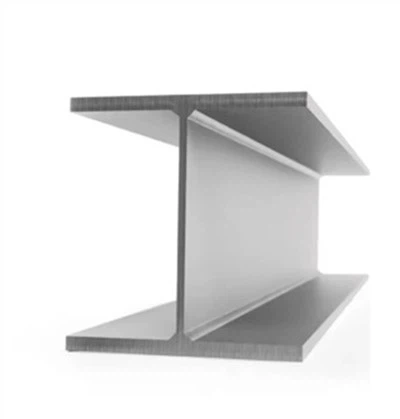


As a reliable supplier of Aluminum H Beams, I am often asked about the various surface treatments available for these versatile structural components. Surface treatments play a crucial role in enhancing the performance, durability, and aesthetics of Aluminum H Beams, making them suitable for a wide range of applications. In this blog post, I will explore the different surface treatments commonly used for Aluminum H Beams and discuss their benefits and applications.
Anodizing
Anodizing is one of the most popular surface treatments for Aluminum H Beams. It is an electrochemical process that converts the surface of the aluminum into a durable, corrosion-resistant oxide layer. Anodizing not only provides excellent protection against corrosion but also enhances the appearance of the Aluminum H Beam by creating a smooth, uniform finish.
The anodizing process involves immersing the Aluminum H Beam in an electrolyte solution and passing an electric current through it. This causes the aluminum atoms on the surface to react with oxygen in the electrolyte, forming a layer of aluminum oxide. The thickness of the anodized layer can be controlled by adjusting the anodizing parameters, such as the current density and the duration of the process.


One of the key benefits of anodizing is its excellent corrosion resistance. The anodized layer acts as a barrier, preventing the underlying aluminum from coming into contact with moisture and other corrosive substances. This makes anodized Aluminum H Beams ideal for outdoor applications, such as building facades, bridges, and marine structures.
In addition to its corrosion resistance, anodizing also provides good wear resistance. The anodized layer is hard and durable, making it resistant to scratches and abrasions. This makes anodized Aluminum H Beams suitable for applications where the surface is likely to be subjected to wear and tear, such as in industrial machinery and equipment.
Anodizing also offers a wide range of color options. The anodized layer can be dyed to achieve a variety of colors, allowing for greater design flexibility. This makes anodized Aluminum H Beams a popular choice for architectural applications, where aesthetics are important.
If you are interested in anodized Aluminum H Beams, you can learn more about them here.
Powder Coating
Powder coating is another popular surface treatment for Aluminum H Beams. It is a dry finishing process that involves applying a fine powder of pigment and resin to the surface of the Aluminum H Beam. The powder is electrostatically charged, which causes it to adhere to the surface of the beam. The beam is then heated in an oven, which causes the powder to melt and flow, forming a smooth, durable finish.
One of the main advantages of powder coating is its excellent durability. The powder coating forms a tough, protective layer that is resistant to chipping, scratching, and fading. This makes powder-coated Aluminum H Beams suitable for outdoor applications, where they are exposed to the elements.
Powder coating also offers a wide range of color options. The powder can be formulated to achieve a variety of colors and finishes, including matte, gloss, and metallic. This allows for greater design flexibility and makes powder-coated Aluminum H Beams a popular choice for architectural applications.
In addition to its durability and color options, powder coating is also an environmentally friendly surface treatment. Unlike traditional liquid paints, powder coating does not contain solvents, which means that it does not emit volatile organic compounds (VOCs) into the atmosphere. This makes powder coating a more sustainable choice for surface finishing.
Painting
Painting is a simple and cost-effective surface treatment for Aluminum H Beams. It involves applying a layer of paint to the surface of the beam using a brush, roller, or spray gun. Painting can provide good protection against corrosion and can also enhance the appearance of the Aluminum H Beam.
One of the key benefits of painting is its versatility. There are a wide variety of paints available, each with its own unique properties and characteristics. This allows for greater flexibility in choosing a paint that is suitable for the specific application and environment.
Painting can also be used to achieve a specific color or finish. There are a wide range of colors and finishes available, including matte, gloss, and metallic. This makes painting a popular choice for architectural applications, where aesthetics are important.
However, painting also has some limitations. The paint layer is relatively thin and may not provide as much protection against corrosion as other surface treatments, such as anodizing or powder coating. In addition, the paint may require regular maintenance, such as repainting, to maintain its appearance and performance.
Galvanizing
Galvanizing is a surface treatment that involves coating the Aluminum H Beam with a layer of zinc. The zinc coating provides excellent protection against corrosion by acting as a sacrificial anode. When the zinc coating is exposed to moisture and oxygen, it corrodes preferentially, protecting the underlying aluminum from corrosion.
Galvanizing is a popular surface treatment for steel H beams, but it can also be used for Aluminum H Beams. However, the galvanizing process for aluminum is different from that for steel. In the case of aluminum, a hot-dip galvanizing process is typically used, which involves immersing the Aluminum H Beam in a bath of molten zinc.
One of the main benefits of galvanizing is its excellent corrosion resistance. The zinc coating provides long-term protection against corrosion, even in harsh environments. This makes galvanized Aluminum H Beams suitable for outdoor applications, such as building facades, bridges, and marine structures.
Galvanizing also provides good durability. The zinc coating is hard and resistant to scratches and abrasions, making it suitable for applications where the surface is likely to be subjected to wear and tear.
If you are interested in galvanized steel H beams, you can learn more about them here.
Comparison of Surface Treatments
Each surface treatment has its own unique advantages and disadvantages. The choice of surface treatment will depend on a variety of factors, including the specific application, the environment in which the Aluminum H Beam will be used, and the desired appearance and performance.
| Surface Treatment | Corrosion Resistance | Wear Resistance | Aesthetics | Cost |
|---|---|---|---|---|
| Anodizing | Excellent | Good | Good | Moderate |
| Powder Coating | Excellent | Good | Good | Moderate |
| Painting | Good | Fair | Good | Low |
| Galvanizing | Excellent | Good | Fair | Moderate |
Conclusion
Surface treatments play a crucial role in enhancing the performance, durability, and aesthetics of Aluminum H Beams. There are a variety of surface treatments available, each with its own unique properties and characteristics. The choice of surface treatment will depend on a variety of factors, including the specific application, the environment in which the Aluminum H Beam will be used, and the desired appearance and performance.
As a supplier of Aluminum H Beams, I can provide you with expert advice on choosing the right surface treatment for your specific needs. Whether you are looking for a surface treatment that provides excellent corrosion resistance, good wear resistance, or a specific color or finish, I can help you find the solution that is right for you.
If you are interested in purchasing Aluminum H Beams or have any questions about surface treatments, please feel free to contact me. I look forward to working with you to meet your needs.
References
- ASM Handbook, Volume 5: Surface Engineering, ASM International, 2004.
- Aluminum Association, Aluminum Design Manual, 2015.
- Powder Coating Institute, Powder Coating Technology Handbook, 2018.