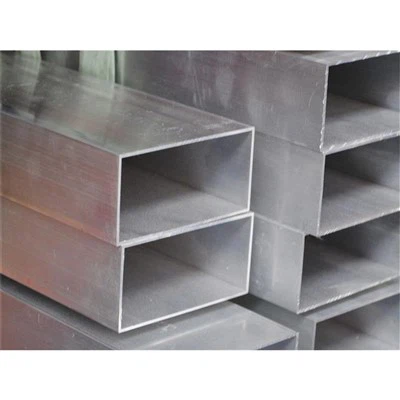


Hey there! As an aluminum tube supplier, I often get asked about the best welding methods for aluminum tubes. Aluminum is a popular choice for various applications due to its lightweight, corrosion resistance, and high strength-to-weight ratio. But welding aluminum can be a bit tricky compared to other metals because of its unique properties. In this blog, I'll walk you through the commonly used welding methods for aluminum tubes and help you understand which one might be the best fit for your project.
TIG Welding (Gas Tungsten Arc Welding - GTAW)
TIG welding is one of the most popular methods for welding aluminum tubes. I love this method because it offers precise control over the welding process, which is super important when working with aluminum.


Here's how it works: In TIG welding, a non-consumable tungsten electrode is used to create an arc between the electrode and the aluminum tube. A shielding gas, usually argon, is used to protect the weld area from atmospheric contamination. You can add a filler metal if needed, but it's not always necessary depending on the joint design.
The advantages of TIG welding for aluminum tubes are numerous. First off, it produces high-quality, clean welds with excellent aesthetics. The precise control allows you to weld thin-walled aluminum tubes without burning through. It also works well for both small and large-scale projects. However, it does have some downsides. TIG welding is a relatively slow process, and it requires a high level of skill to master. If you're a beginner, it might take some time to get the hang of it.
For example, if you're working on a custom aluminum tube frame for a bicycle, TIG welding would be a great choice. You can achieve strong, clean welds that will not only look good but also ensure the structural integrity of the frame.
MIG Welding (Gas Metal Arc Welding - GMAW)
MIG welding is another commonly used method for welding aluminum tubes. It's a bit faster than TIG welding, which makes it a great option for high-volume production.
In MIG welding, a consumable wire electrode is fed through a welding gun. The wire acts as both the electrode and the filler metal. A shielding gas, typically a mixture of argon and helium, is used to protect the weld pool. The process is semi-automatic, which means the wire feeding and shielding gas flow are automated, but you still control the movement of the welding gun.
One of the main advantages of MIG welding is its speed. You can cover more ground in less time compared to TIG welding. It's also relatively easy to learn, making it a good choice for beginners. However, MIG welding can be a bit more challenging when it comes to welding thin-walled aluminum tubes. There's a higher risk of burn-through, and the welds might not be as aesthetically pleasing as those produced by TIG welding.
Let's say you're manufacturing aluminum tube fences in large quantities. MIG welding would be a cost-effective and efficient option to get the job done quickly.
Laser Welding
Laser welding is a relatively new but increasingly popular method for welding aluminum tubes. It uses a high-powered laser beam to melt and join the aluminum.
The biggest advantage of laser welding is its precision. It can create very narrow and deep welds, which is great for applications where space is limited. Laser welding also produces minimal heat-affected zones, which means less distortion of the aluminum tube. It's a clean process with little to no spatter, and it can be automated for high-volume production.
However, laser welding equipment is expensive, and the initial setup costs can be quite high. It also requires a high level of expertise to operate the equipment safely and effectively.
For instance, if you're working on a high-tech aerospace project that requires extremely precise and strong welds on aluminum tubes, laser welding would be the way to go.
Resistance Welding
Resistance welding is a process where an electric current is passed through the aluminum tubes at the joint area. The resistance to the current flow generates heat, which melts the aluminum and forms a weld.
There are different types of resistance welding, such as spot welding and seam welding. Spot welding is used to create individual weld spots, while seam welding produces a continuous weld along the joint.
Resistance welding is fast and can be easily automated. It's also a cost-effective method for mass production. However, it's not suitable for all joint designs, and the equipment can be bulky and expensive.
If you're making aluminum tube furniture frames, spot welding could be a good option to quickly join the tubes at specific points.
Choosing the Right Aluminum Tube
Before you start welding, it's important to choose the right type of aluminum tube for your project. We offer a variety of aluminum tubes, including 5052 Aluminum Tube, 1070 Aluminum Tube, and 1060 Aluminum Tube. Each type has its own unique properties and is suitable for different applications.
5052 aluminum tube is known for its excellent corrosion resistance and medium strength. It's a popular choice for marine applications, automotive parts, and general fabrication. 1070 aluminum tube is a pure aluminum tube with high ductility and good thermal conductivity. It's often used in electrical applications and heat exchangers. 1060 aluminum tube is also a pure aluminum tube with similar properties to 1070 but with slightly lower strength. It's commonly used in food processing equipment and chemical containers.
Conclusion
In conclusion, there are several welding methods available for aluminum tubes, each with its own advantages and disadvantages. TIG welding offers high precision and quality, MIG welding is fast and easy to learn, laser welding provides extreme precision, and resistance welding is suitable for mass production.
When choosing a welding method, consider factors such as the thickness of the aluminum tube, the joint design, the required weld quality, and the production volume. And don't forget to choose the right type of aluminum tube for your project.
If you're interested in purchasing aluminum tubes or have any questions about welding them, feel free to reach out. We're here to help you find the best solutions for your needs. Whether you're a DIY enthusiast or a large-scale manufacturer, we've got the aluminum tubes and expertise to support your project. Let's start a conversation and see how we can work together!
References
- AWS Welding Handbook, Volume 2: Welding Processes
- Aluminum Association Technical Publications
- Welding Journal, various issues